













West Midlands Police seized and destroyed a legally compliant electric cargo bike in Birmingham, after officers used a flawed test to wrongly classify it as an illegal e-motorbike.

What Happened On New Street
A delivery cyclist was stopped by police on New Street in Birmingham city centre on 24 April 2026. Officers believed the electric cargo bike he was riding was an illegal e-motorbike. The bike was a Tern HSD, hired out through a council funded scheme run by the Birmingham Bike Foundry. road.cc
How Police Tested The Bike
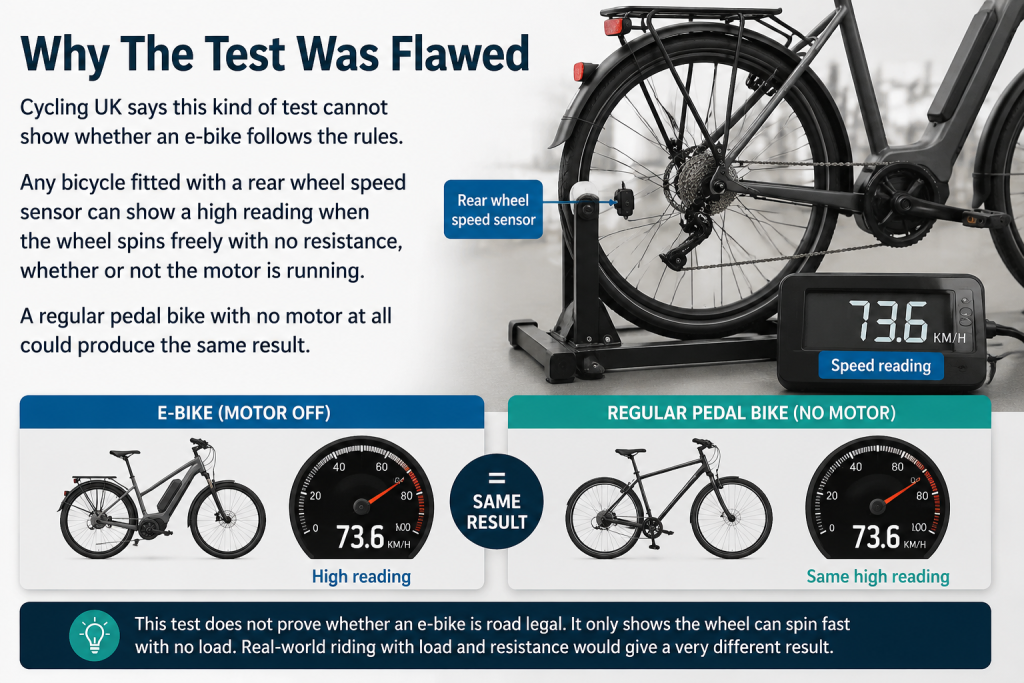
Officers lifted the rear wheel off the ground and spun the pedals by hand. The bike’s onboard computer recorded a speed of 47kph during this test. Police treated this reading as proof that the bike exceeded the legal limit for an electrically assisted pedal cycle. The rider told officers several times that the motor was switched off during the test.
El Niño Forecast 2026: Latest Updates, Trends & What to Expect
El Niño conditions are active in 2026 and expected to strengthen through the rest of the year, according to NOAA’s Climate Prediction Center. Current…

Why The Test Was Flawed
Cycling UK says this kind of test cannot show whether an e-bike follows the rules. Any bicycle fitted with a rear wheel speed sensor can show a high reading when the wheel spins freely with no resistance, whether or not the motor is running. A regular pedal bike with no motor at all could produce the same result.
What The Law Actually Says
UK law sets clear limits for what counts as a legal e-bike. Bikes that go beyond these limits are treated as motor vehicles, which require a licence, registration and insurance.
| Feature | Legal E-Bike (EAPC) | Illegal E-Motorbike |
|---|---|---|
| Motor power | Up to 250 watts | Often modified beyond this |
| Assisted speed cut-off | 15.5mph (25kph) | Motor keeps assisting above this speed |
| Insurance needed | No | Yes |
| Licence needed | No | Yes |
| Minimum rider age | 14 | Varies by vehicle type |
The Tern HSD hired by the rider met every rule for a legal e-bike. Its motor cut off assistance at 15.5mph, and it needed no insurance or licence to ride.
What Happened To The Bike After Seizure
The rider was given a fixed penalty notice for riding without insurance, along with six points on his licence. He declined the penalty and chose to challenge it in court instead. Meanwhile, the bike itself was taken away with no clear process for the owner to appeal or track it down.
Birmingham Bike Foundry says it spent weeks trying to contact West Midlands Police through the standard 101 non-emergency line, without success. Staff eventually traced the bike through a recovery company shown in a photo from a local news report. By the time contact was made, the force confirmed the bike had already been destroyed. road.cc
The Wider Pattern Of Wrongful Seizures
This case is not the only one of its kind. Wheels for Wellbeing, a group that supports inclusive cycling, says it has worked on several similar cases in the past year, where legal e-cycles or mobility aids were wrongly seized under laws meant for motor vehicles.
The group says that once police seize a legal e-cycle using motor vehicle laws, getting it back can be very difficult. It has called for national guidance and training so officers can tell the difference between illegal e-motorbikes and legal e-cycles or mobility aids.
Separately, Birmingham has also run larger operations targeting e-bikes that were illegally modified to travel far faster than the legal limit, some reaching speeds of up to 40mph. Those crackdowns involved bikes that had genuinely been altered to exceed the rules, unlike the Tern HSD in this case. BBC
What Bike Industry Groups Are Asking For
The Bicycle Association, the trade body for the UK cycle industry, says it supports police efforts to remove illegal e-motorbikes from the roads. At the same time, it says testing procedures need review, along with consistent training and clear guidance for officers.
Cycling UK’s Cyclists’ Defence Fund is now supporting a legal appeal on behalf of the rider and Birmingham Bike Foundry. The appeal argues that the process which led to the bike’s destruction was fundamentally flawed, and is seeking compensation along with a review of the testing method used.
What West Midlands Police Has Said
A spokesperson for West Midlands Police confirmed that a rider was stopped on 24 April in Birmingham city centre and issued a fixed penalty notice for riding without insurance. The force said the rider was told of his right to challenge the decision in court, and that a complaint about the seizure has since been received and is under review.
FAQ: Birmingham Delivery Cyclist Bike Seized
Q: What happened to the Birmingham delivery cyclist’s bike?
A: West Midlands Police stopped a delivery rider on New Street in Birmingham city centre on 24 April and seized his e-bike, a Tern HSD, after wrongly identifying it as an illegal electric motorcycle. The bike was later destroyed.
Q: How much was the bike worth?
A: The e-bike was valued at roughly £5,500 to £6,500. It had been purchased by the Birmingham Bike Foundry as part of a council-funded try-before-you-buy hire scheme, and was being rented out to the cyclist for £50 a month.
Q: Was the bike actually illegal?
A: No. The Tern HSD is a legal Electrically Assisted Pedal Cycle (EAPC) under UK law, with power capped at 250 watts and assistance limited to 15.5mph. Police mistakenly classified it as an electric motorcycle, which would require a licence and insurance.
Q: What penalty did the cyclist face?
A: The rider was issued a Fixed Penalty Notice — a £300 fine and six points on his licence — for allegedly riding without insurance, or the option of a court hearing.
Q: Did the bike shop try to get the bike back?
A: Yes. Birmingham Bike Foundry contacted police with documentation proving the bike was legal and asked for its return. Despite this, the bike had already been destroyed. West Midlands Police later admitted an officer received this evidence by email but failed to pass it on to colleagues.
Q: Has anyone taken legal action?
A: Yes. Both the rider and Birmingham Bike Foundry have launched a legal appeal, supported by Cycling UK’s Cyclists’ Defence Fund, arguing the seizure and destruction process was “fundamentally flawed.”
Q: How has this affected the bike shop and hire scheme?
A: Birmingham Bike Foundry, a not-for-profit, says the incident risks damaging trust in its e-bike hire scheme and could discourage people from choosing legal, well-made e-bikes over cheaper illegal alternatives.
Q: What has West Midlands Police said in response?
A: A police spokesperson confirmed the stop and fine, and acknowledged receiving an email stating the bike was legal along with a manual proving it, but said this information was not passed on to the officers involved or acted upon.
Q: What law allows police to seize and destroy e-bikes like this?
A: Police cite powers under the Road Traffic Act 1988, Section 165A, which relates to seizing “invalid carriages” — legislation that campaigners argue is being misapplied to legal e-bikes.
Q: Is this part of a wider pattern?
A: Campaign groups, including the disabled cycling charity Wheels for Wellbeing, say this case is one of several recent incidents involving the mistaken seizure of legal e-bikes and mobility aids by police forces, raising concerns about officer training and enforcement procedures.