









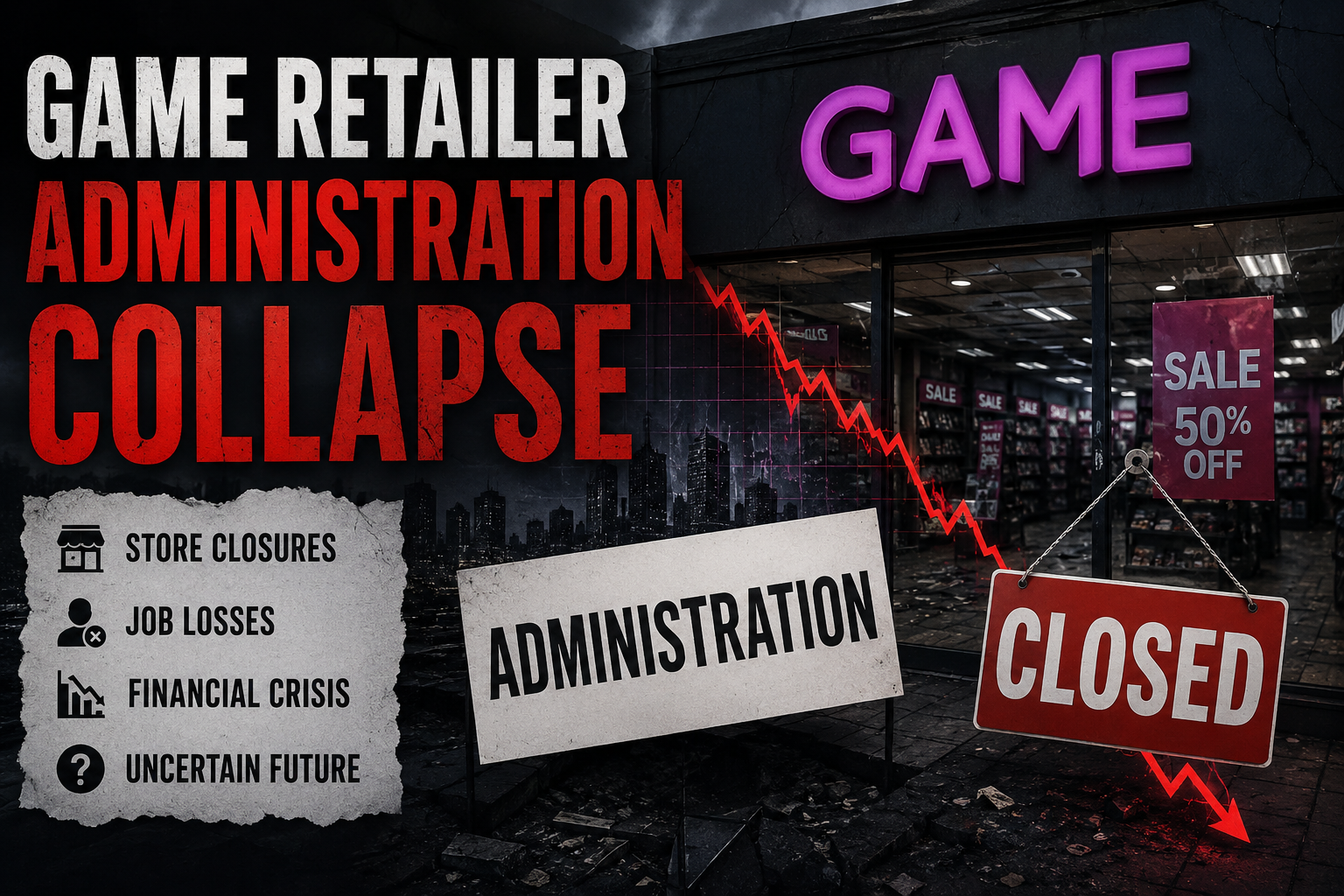
Game Retail Limited, the company behind the GAME video game store chain, has entered administration owing £15.8 million. The collapse marks the end of one of the UK’s most recognised high street gaming brands.

What Happened to Game Retail Limited
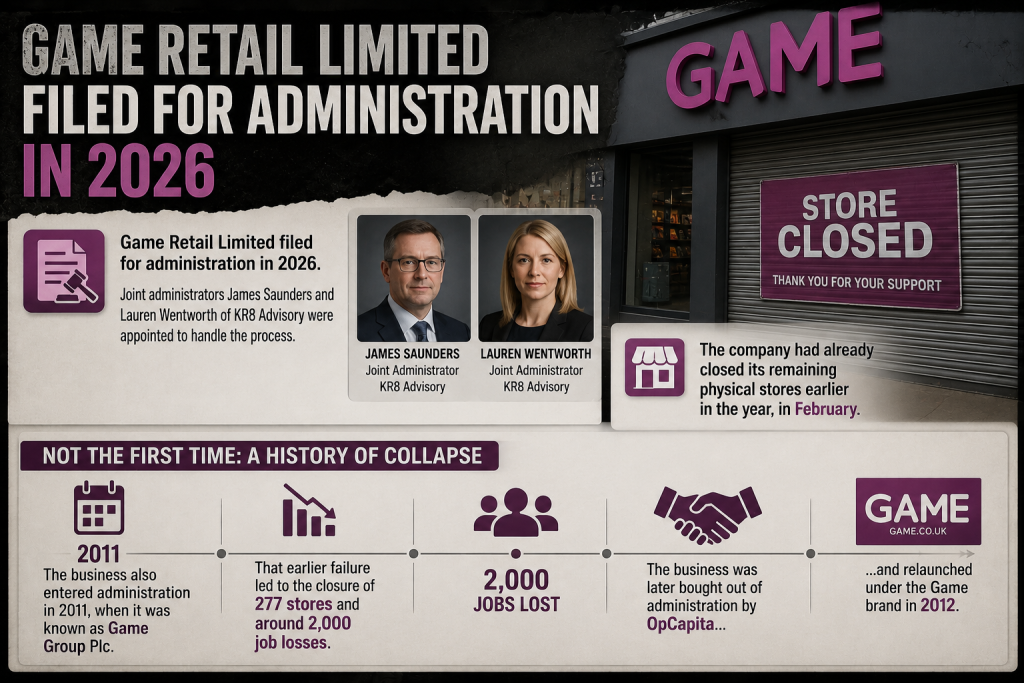
Game Retail Limited filed for administration in 2026. Joint administrators James Saunders and Lauren Wentworth of KR8 Advisory were appointed to handle the process. The company had already closed its remaining physical stores earlier in the year, in February.
This is not the first time the business has collapsed. It also entered administration in 2011, when it was known as Game Group Plc. That earlier failure led to the closure of 277 stores and around 2,000 job losses. The business was later bought out of administration by OpCapita and relaunched under the Game brand in 2012.
Breakdown of the £15.8 Million Debt
According to the administrators’ report, the total debt of £15.8 million is split between secured and unsecured creditors.
| Creditor Type | Amount Owed |
|---|---|
| Secured creditor | £3.5 million |
| Unsecured creditors | £12 million |
| Total debt | £15.8 million |
Unsecured creditors are expected to lose most of what they are owed. This group typically includes suppliers, landlords and other trade partners who do not hold a legal claim over specific company assets.
Minecraft PlayBattleSquare | The Ultimate PvP Arena Guide for 2026
Minecraft PlayBattleSquare is a fast-paced PvP server where players fight in short, intense matches. It offers diverse modes including four-versus-four team deathmatch and two-versus-two…
Why the Business Collapsed
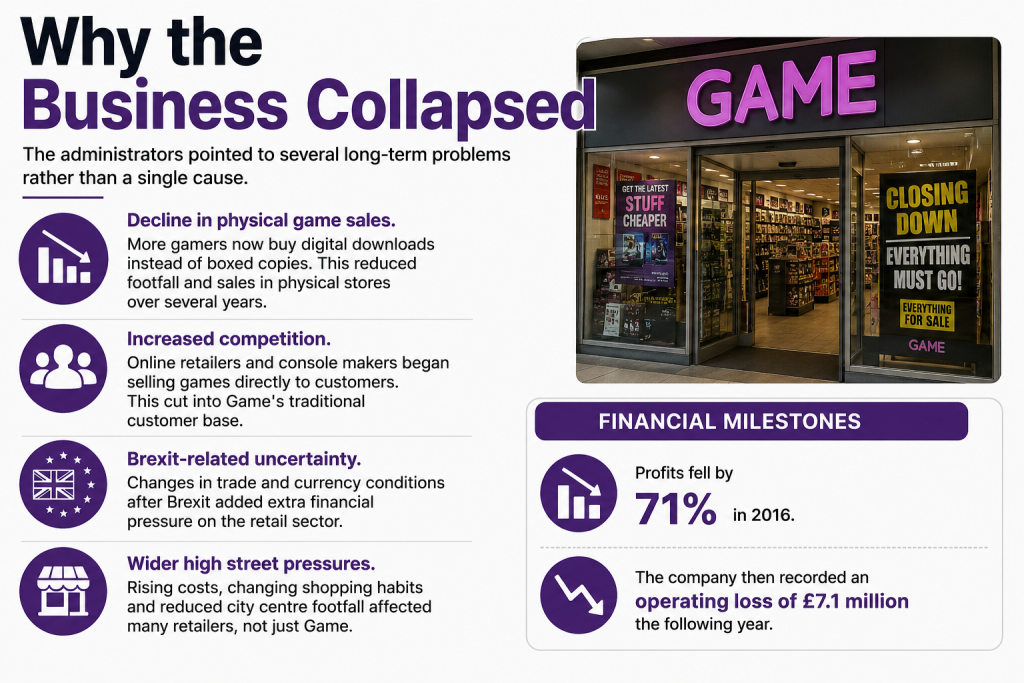
The administrators pointed to several long-term problems rather than a single cause.
Decline in physical game sales. More gamers now buy digital downloads instead of boxed copies. This reduced footfall and sales in physical stores over several years.
Increased competition. Online retailers and console makers began selling games directly to customers. This cut into Game’s traditional customer base.
Brexit-related uncertainty. Changes in trade and currency conditions after Brexit added extra financial pressure on the retail sector.
Wider high street pressures. Rising costs, changing shopping habits and reduced city centre footfall affected many retailers, not just Game.
The report also noted specific financial milestones. Profits fell by 71% in 2016. The company then recorded an operating loss of £7.1 million the following year.
Timeline of Game’s Financial History
| Year | Event |
|---|---|
| 1990 | Game brand founded |
| 2011 | Game Group Plc enters administration; 277 stores close |
| 2012 | Business relaunched as Game Retail Limited after OpCapita acquisition |
| 2016 | Profits drop by 71% |
| 2017 | Operating loss of £7.1 million recorded |
| 2019 | Frasers Group acquires Game’s intellectual property |
| 2026 | Company closes all physical stores in February |
| 2026 | Game Retail Limited enters administration owing £15.8 million |
Role of Frasers Group
Frasers Group, the retail group led by Mike Ashley, acquired Game’s intellectual property in 2019. This move was intended to help stabilise the business. Despite this support, the company continued to face falling sales and rising costs, which eventually led to the store closures and administration.
What Administration Means for Creditors and Customers
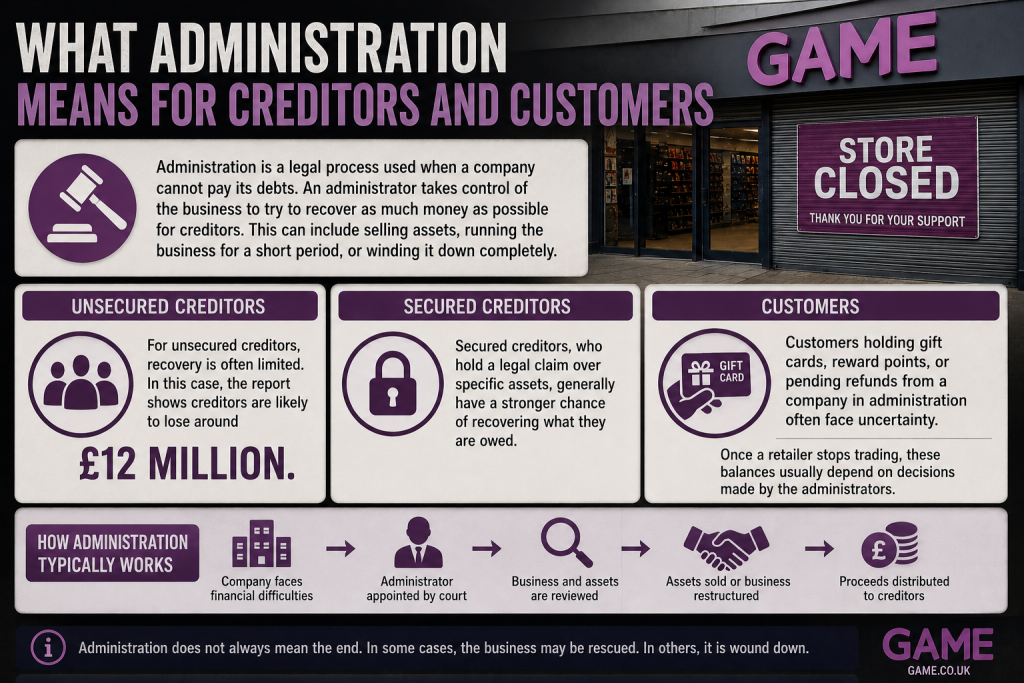
Administration is a legal process used when a company cannot pay its debts. An administrator takes control of the business to try to recover as much money as possible for creditors. This can include selling assets, running the business for a short period, or winding it down completely.
For unsecured creditors, recovery is often limited. In this case, the report shows creditors are likely to lose around £12 million. Secured creditors, who hold a legal claim over specific assets, generally have a stronger chance of recovering what they are owed.
Customers holding gift cards, reward points, or pending refunds from a company in administration often face uncertainty. Once a retailer stops trading, these balances usually depend on decisions made by the administrators.
Wider Impact on the UK Gaming Retail Sector
Game’s collapse reflects a broader shift in how people buy and play video games. Physical stores across the UK have struggled as digital downloads, subscription services and online marketplaces have grown. This trend is not limited to gaming retail. Many high street sectors have faced similar pressure over the past decade.
The closure of Game’s stores also affects local high streets, where the brand was often a long-standing tenant. Job losses linked to earlier store closures have added to wider concerns about retail employment in town centres.
FAQ: Game Retailer Administration Collapse
Q: How much debt did Game Retail Limited owe when it entered administration?
Game Retail Limited owed £15.8 million in total. This included £3.5 million to a secured creditor and around £12 million to unsecured creditors.
Q: Who are the administrators handling Game’s collapse?
James Saunders and Lauren Wentworth, both from KR8 Advisory, were appointed as joint administrators.
Q: When did Game close its physical stores?
Game closed its remaining physical stores in February, before formally entering administration later in the year.
Q: Is this the first time Game has gone into administration?
No. Game Group Plc first entered administration in 2011. That collapse led to the closure of 277 stores and around 2,000 job losses before the business was bought out and relaunched in 2012.
Q: What caused Game’s financial collapse?
The main causes were a long-term decline in physical game sales, growing competition from digital downloads and online retailers, Brexit-related uncertainty, and wider pressure on high street retail.
Q: Did Frasers Group own Game Retail Limited?
Frasers Group acquired Game’s intellectual property in 2019 to help stabilise the business. This did not prevent the later financial decline.
Q: Will unsecured creditors get their money back?
Unsecured creditors are expected to recover very little. The administrators’ report suggests losses of around £12 million for this group.
Q: What happens to gift cards and reward points after a retailer enters administration?
These balances usually depend on decisions made by the administrators. Once a company stops trading, customers often face uncertainty over refunds, gift cards and loyalty points.
Q: What does entering administration actually mean?
Administration is a legal process for companies that cannot pay their debts. An administrator takes control of the business to try to recover money for creditors, which can involve selling assets or winding down operations.
Q: Is Game Retail Limited the same as GameStop?
No. Game Retail Limited operated the GAME brand in the UK. GameStop is a separate, US-based video game retailer with its own ownership and financial history.