












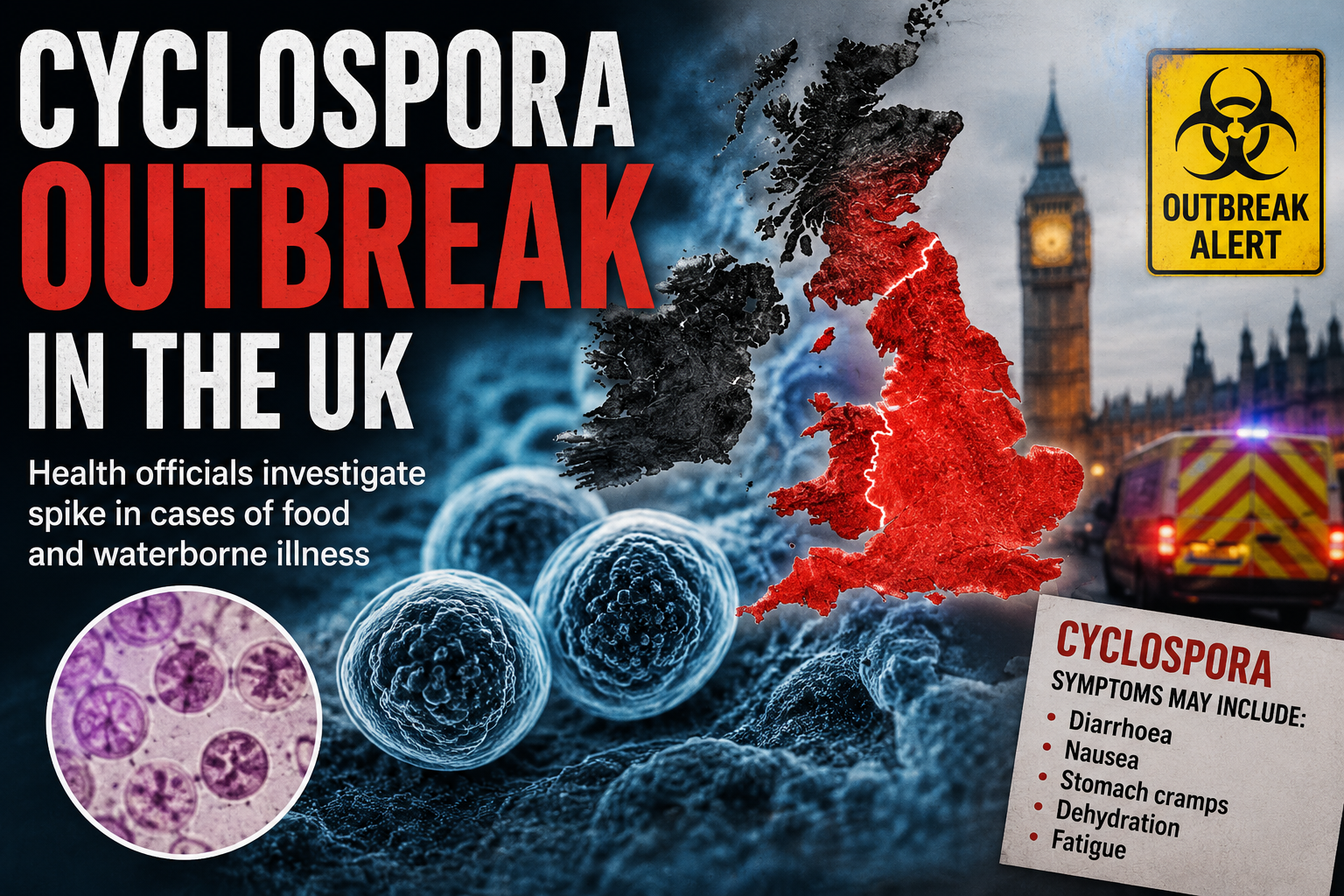
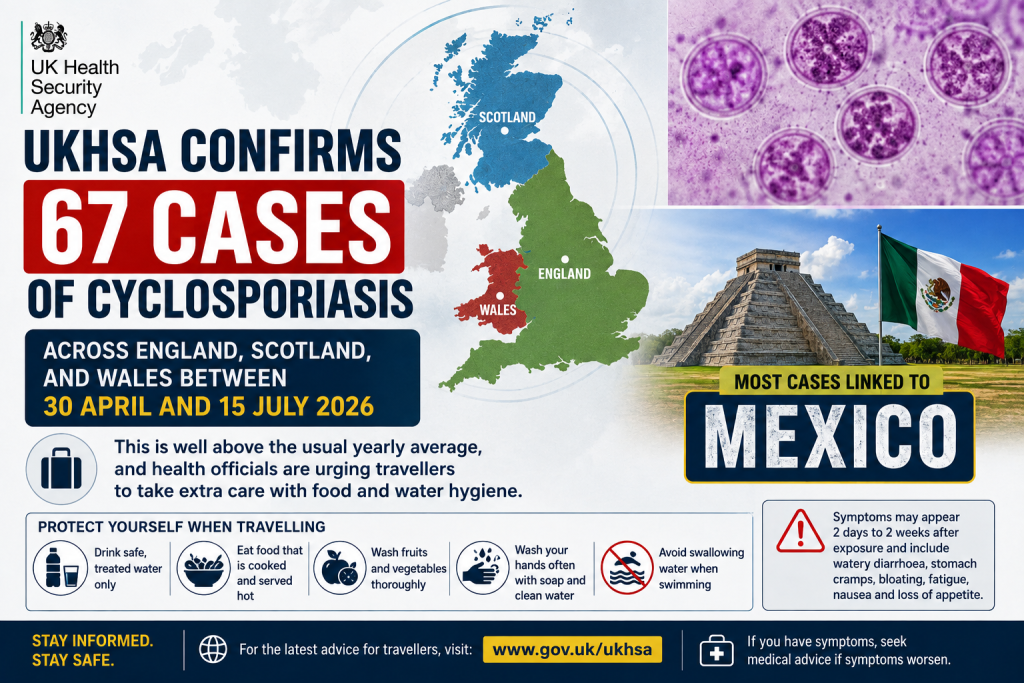
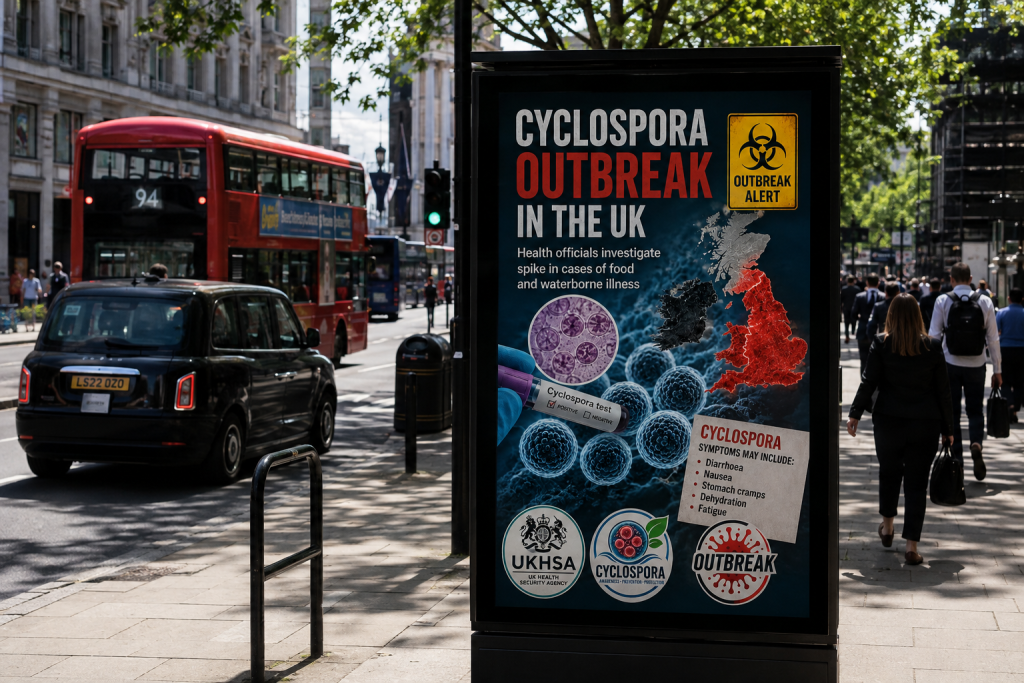
UKHSA has confirmed 67 cases of cyclosporiasis across England, Scotland, and Wales between 30 April and 15 July 2026, most linked to travel to Mexico. This is well above the usual yearly average, and health officials are urging travellers to take extra care with food and water hygiene.

What Is Happening With Cyclospora Cases in the UK
UKHSA has recorded a sharp rise in cyclospora infections this year. The latest figures show 30 cases in England, 27 in Scotland, and 10 in Wales between 30 April and 15 July 2026. This is a big jump compared to the average of 93 cases seen across a whole year between 2022 and 2025. Most of these cases were picked up abroad and only showed symptoms after people returned home. Travel information is available for 52 of the 67 cases, and the numbers point clearly to one main destination. (Source: GOV.UK)

Mexico Travel Is the Main Link
Out of the 52 cases with known travel history, 48 people had travelled to Mexico. One of them had also visited the United States. One further case involved travel to the US only, and another person had travelled to Kenya. Most of the Mexico related cases stayed in hotels in the Riviera Maya and Cancún areas. These travellers were on all inclusive holiday packages and ate a range of different food and drink during their stay. (Source: GOV.UK)
What UKHSA Says About the Rise
Dr Philip Veal, Consultant in Travel Health at UKHSA, has confirmed the trend directly. He said there has been a clear rise in Cyclospora infections among people coming back from Mexico, and explained that the infection is caused by a parasite that affects the stomach and intestines. He also pointed out that travellers can lower their risk by following good food and water hygiene steps, even at high end all inclusive resorts. (Source: ITV News)

What Cyclospora Is and How It Spreads
Cyclospora is a tiny parasite that causes an illness called cyclosporiasis. It does not occur naturally in the UK. It is commonly found in tropical and subtropical regions, including parts of Central and South America, South and Southeast Asia, the Middle East, and Africa. The parasite spreads through food or water that has been contaminated with infected human waste. It cannot spread from person to person through normal contact. (Source: UKHSA Blog)
Common Food Sources Linked to Outbreaks
Cyclospora outbreaks are usually linked to fresh produce. Contaminated herbs, salad leaves, and soft fruit are the most common sources of infection. People often pick up the parasite by eating raw or lightly washed produce that has come into contact with contaminated water during growing or handling. This is why hygiene during food preparation plays such a large role in prevention. (Source: GOV.UK)
Symptoms to Watch For
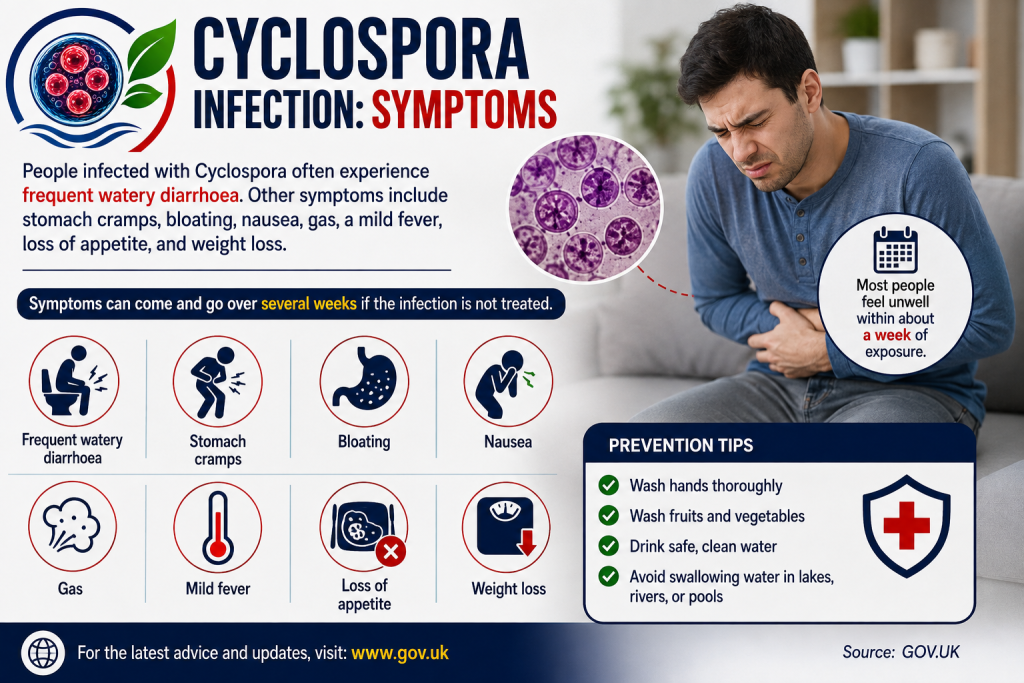
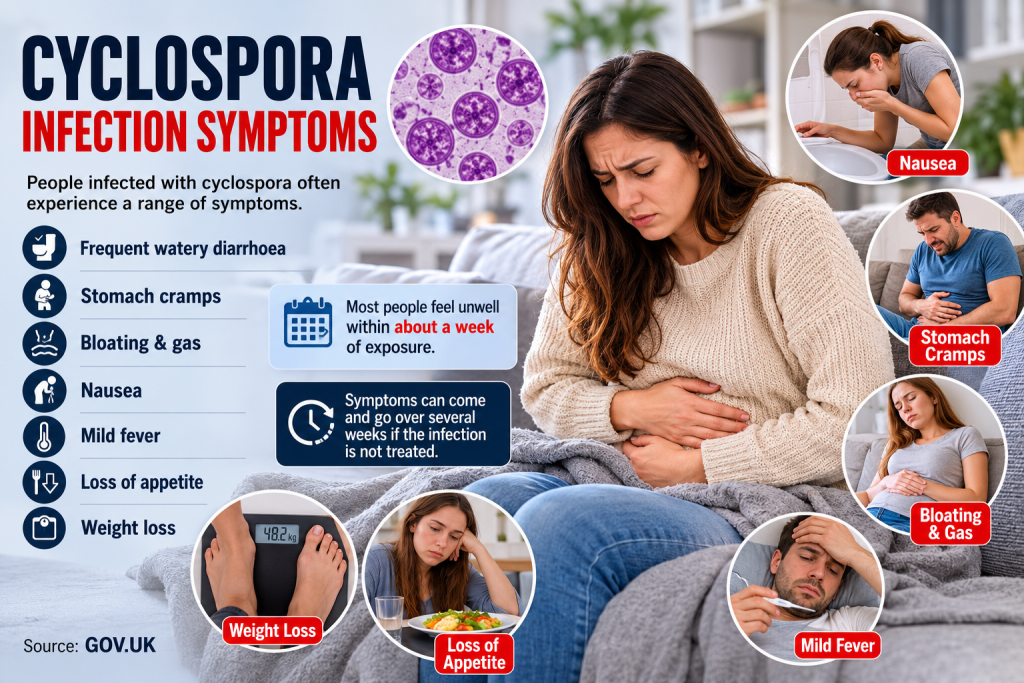
People infected with cyclospora often experience frequent watery diarrhoea. Other symptoms include stomach cramps, bloating, nausea, gas, a mild fever, loss of appetite, and weight loss. Most people feel unwell within about a week of exposure. Symptoms can come and go over several weeks if the infection is not treated. (Source: GOV.UK)
How Long Symptoms Usually Last
| Aspect | Details |
|---|---|
| Typical onset | About one week after exposure |
| Duration if untreated | Can last several weeks, with symptoms coming and going |
| Severity | Usually mild, but some cases are prolonged or severe |
| Treatment | Antibiotics may be needed for stronger cases |
| Recovery | Most people recover fully with proper care |
UKHSA Response and Ongoing Investigation
UKHSA is continuing to investigate the cases alongside partner organisations. This includes the National Travel Health Network and Centre, ABTA, and public health authorities in Mexico. The agency expects a further rise in travel related cases this summer, driven by higher travel numbers to Mexico and a possible increase linked to a larger outbreak currently happening in the United States. (Source: UKHSA Blog)
The Wider Situation in the United States
The United States is currently dealing with a much larger cyclospora outbreak. Cases have now been reported across 45 states, with Michigan alone reporting more than 10,000 cases. This wider outbreak is one reason UKHSA is keeping a close watch on cases linked to US travel as well as Mexico. (Source: Outbreak News Today)
Steps Travellers Can Take to Reduce Risk
UKHSA has shared clear advice for anyone travelling to Mexico or other regions where cyclospora is more common. Following these steps can lower the chance of infection, even for people staying in well reviewed hotels.
| Precaution | Why It Helps |
|---|---|
| Drink bottled water | Avoids contaminated tap water |
| Eat thoroughly cooked food | Reduces exposure to unwashed produce |
| Be cautious with salad and herbs | These are common sources of contamination |
| Wash hands regularly | Lowers risk of picking up the parasite |
| Avoid ice from unknown sources | Ice can be made with contaminated water |
This Is Not the First Time This Has Happened
Cyclospora outbreaks linked to Mexico travel are not new for the UK. Similar outbreaks were reported in the summers of 2015, 2016, and 2017. In 2015, 79 UK cases were reported alongside 97 cases in Canada, with many linked to hotels in the same Riviera Maya and Cancún region. In 2017, 78 cases had already been reported by late July, with a large share again linked to Mexico travel. This pattern suggests a recurring seasonal risk rather than a one off event. (Source: PMC)
Bioma Reviews | Probiotics Real Results for Bloating, Doubts on Weight Loss
Bioma users report noticeable bloating relief within days, but the science behind its weight loss claims is much weaker than the marketing suggests. What…

FAQ: Cyclospora Outbreak UK
Q: What is Cyclospora and how does it spread?
Cyclospora is a microscopic parasite that causes cyclosporiasis, a gastrointestinal illness. It spreads when people consume food or water contaminated with infected stool – it isn’t usually passed directly from person to person.
Q: Why has the UKHSA issued a warning?
The UKHSA has reported a sharp rise in cyclospora infections among travellers coming back from holiday. According to Dr Philip Veal, Consultant in Travel Health at UKHSA, the agency has recently detected a rise in Cyclospora infections among travellers returning from Mexico.
Q: Where are people catching the infection?
Most confirmed cases are linked to travel abroad rather than domestic UK transmission. UKHSA data shows 67 people who reported traveling were diagnosed with cyclosporiasis, and 48 of them said they had been in Mexico, staying at hotels near Riviera Maya and Cancun and eating and drinking at their resorts.
Q: What are the symptoms of Cyclospora infection?
The infection is best known for causing sudden, “explosive” watery diarrhea, along with stomach cramps, nausea, loss of appetite, bloating, and fatigue. Symptoms typically begin about a week after exposure, though onset can range from a few days to two weeks.
Q: Is this only affecting travelers, or is it spreading in the UK too?
So far, the UKHSA’s warning centers on travelers rather than a UK-based outbreak. However, the UKHSA expects to see more cases over the summer as an increasing number of Brits visit Mexico, and warned that infections linked to the United States may also increase following a widespread outbreak there.
Q: How can I protect myself while traveling?
Dr Veal advised that travellers to Mexico and other areas where the infection is more common can reduce their risk by following good food and water hygiene measures, including drinking bottled water and eating thoroughly cooked food, even when staying in high-end all-inclusive resorts. He also recommended avoiding certain foods such as fresh uncooked berries and herbs, unpeeled fruit and salad items.
Q: What should I do if I develop symptoms?
Dr Veal urges anyone with symptoms to seek medical attention and inform their healthcare professional of their travel history, since testing is needed to confirm cyclosporiasis (it’s often confused with a standard stomach bug, which usually clears up much faster).
Q: Is the UK outbreak connected to the US outbreak?
There’s a possible link. The UKHSA warned that infections linked to the United States may also increase following a widespread outbreak there, and health authorities are working with ABTA, Mexican public health authorities and travel health experts to investigate the rise and keep travel advice under review.
Q: Is Cyclospora dangerous or life-threatening?
Most people recover fully with appropriate treatment and supportive care such as staying hydrated. Severe or prolonged illness is more likely in immunocompromised individuals. No deaths have been linked to the current related outbreaks.
Q: Is Cyclospora the same as Cryptosporidium?
No – they’re different parasites, though both cause similar-sounding gastrointestinal illnesses (cryptosporidiosis vs. cyclosporiasis) and are sometimes confused with each other in news coverage.