












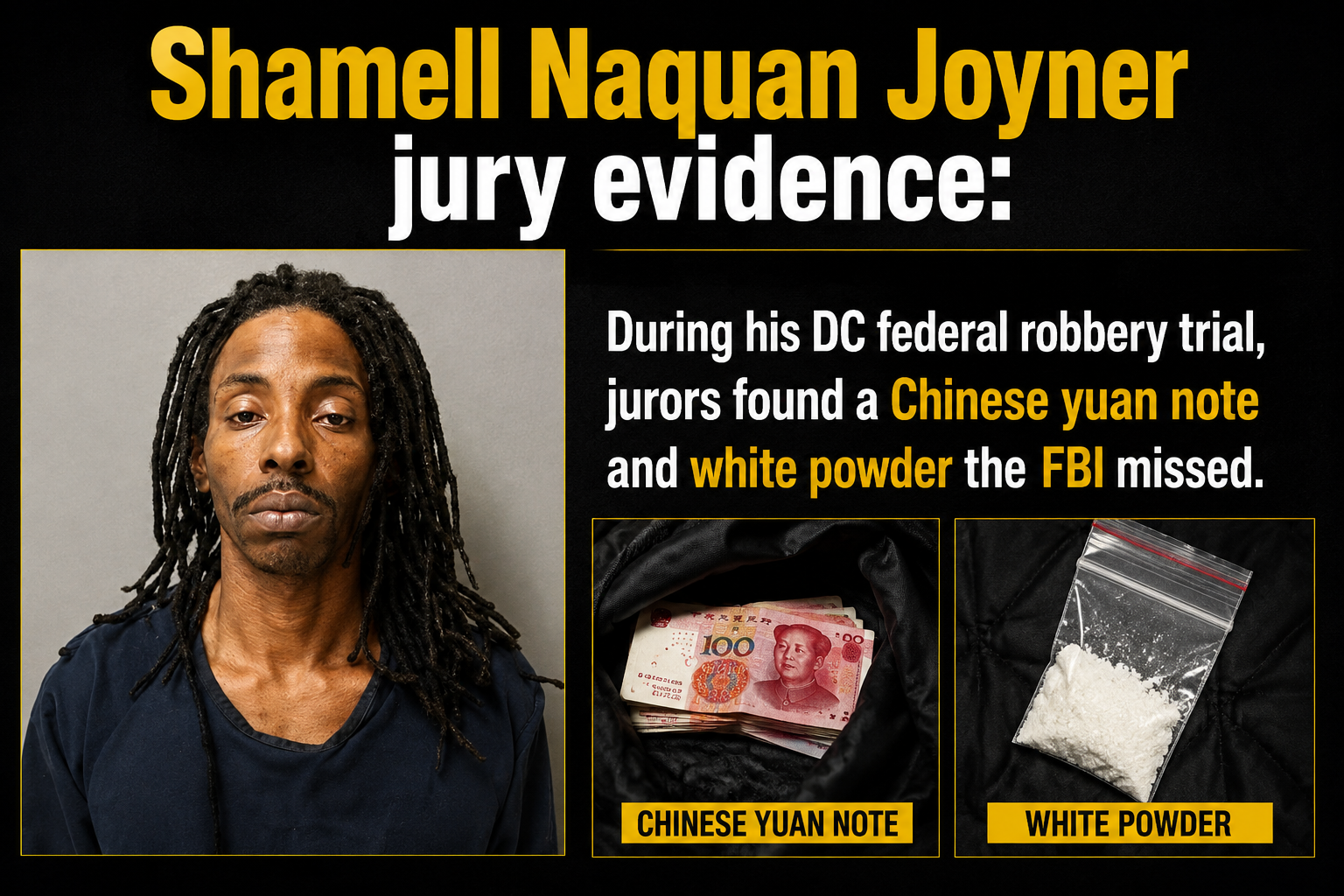
Jurors in the federal trial of Shamell Naquan Joyner found hidden Chinese currency and a suspicious white powder inside evidence clothing that investigators, prosecutors, and the defense had all missed. The discovery happened during jury deliberations and left US District Judge Rudolph Contreras openly stunned.

Who Is Shamell Naquan Joyner
Shamell Naquan Joyner was the defendant in a month long federal armed robbery trial held in Washington, D.C. Prosecutors accused him of robbing several 7-Eleven stores and gas stations, along with stealing cars, during a spring 2023 crime spree across Washington, Maryland, and northern Virginia (Yahoo News).
What Happened During the Trial
The case involved 10 convenience stores and a 28-count superseding indictment. Nine defense lawyers took part in the proceedings at different points. The trial lasted a full month, with witnesses testifying over 10 trial days before jurors began deliberations (USA Herald).
The Discovery Jurors Made
On the second day of deliberations, jurors reached into the pockets of a jacket and a sweatshirt that had already been admitted as evidence. Inside, they found a folded piece of paper holding a white powdery substance and a crumpled Chinese yuan bill. Neither the FBI, the prosecutors, nor Joyner’s defense team had known these items were there (Rolling Out).
Where the Evidence Came From
The jacket had been recovered from a carjacked vehicle and was said to have been worn by the robber. The items had reportedly sat undetected in the evidence room for more than two years before the jury made the discovery on July 22 (USA Herald).
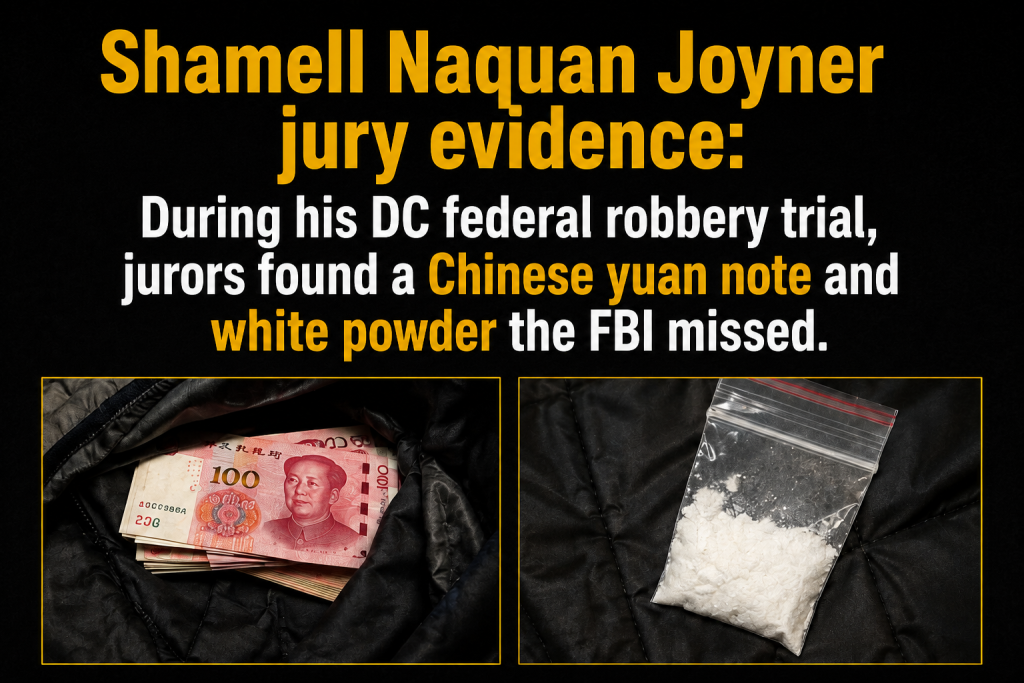
Table: Key Facts About the Discovery
| Detail | Information |
|---|---|
| Items found | Chinese yuan bill and white powdery substance |
| Location found | Pockets of a jacket and a sweatshirt |
| Who found them | Jury members during deliberations |
| Day discovered | Second day of jury deliberations |
| Time undetected | Over two years in the evidence room |
| Judge overseeing case | US District Judge Rudolph Contreras |
How the Judge Reacted
Judge Contreras did not hide his reaction to the discovery. In a written opinion, he said he shared the defendant’s own amazement that law enforcement had missed the currency, the folded note, and the powder entirely. He also made a dry comment from the bench about the oversight (Rolling Out).
How the Court Handled the Situation
After the discovery came to light, the judge brought jurors in one by one and explained that the items were not part of the formal evidence in the case. Each juror confirmed they could set the discovery aside and continue deliberating fairly (Yahoo News).
Response From Law Enforcement and Prosecutors
The FBI declined to explain how its agents overlooked the items during their forensic review. The U.S. Attorney’s Office also avoided giving a direct answer when asked how the oversight happened (CNN via Yahoo News).
Why the Oversight Matters
Legal experts say this kind of mistake is rare in major federal criminal trials. Several longtime Washington lawyers told reporters they had not heard of a situation this embarrassing, though some former prosecutors noted that juries occasionally find evidence that law enforcement did not examine closely enough (Yahoo News).
The Trial’s Outcome
Deliberations continued for about a week after the discovery. The jury ultimately deadlocked on 15 of the 28 counts due to disagreement over reasonable doubt, but convicted Joyner on 13 charges connected to five armed robberies and a carjacking (Yahoo News).
Sentencing Consequences
A spokesperson for the U.S. Attorney’s Office said the jury’s verdict means Joyner will face a 31 year mandatory minimum sentence tied to the convicted charges (Yahoo News).
Defense Team’s Position
Joyner’s defense team has not filed an appeal as of the latest reports. The legal team declined to comment further, citing the case’s unresolved final judgment (USA Herald).
What This Case Shows About Evidence Handling
This case highlights how evidence collected at a crime scene can pass through multiple reviews by police, forensic teams, and attorneys without every detail being caught. It also shows how jurors themselves play an active role in examining physical evidence during deliberations, not just listening to testimony……