











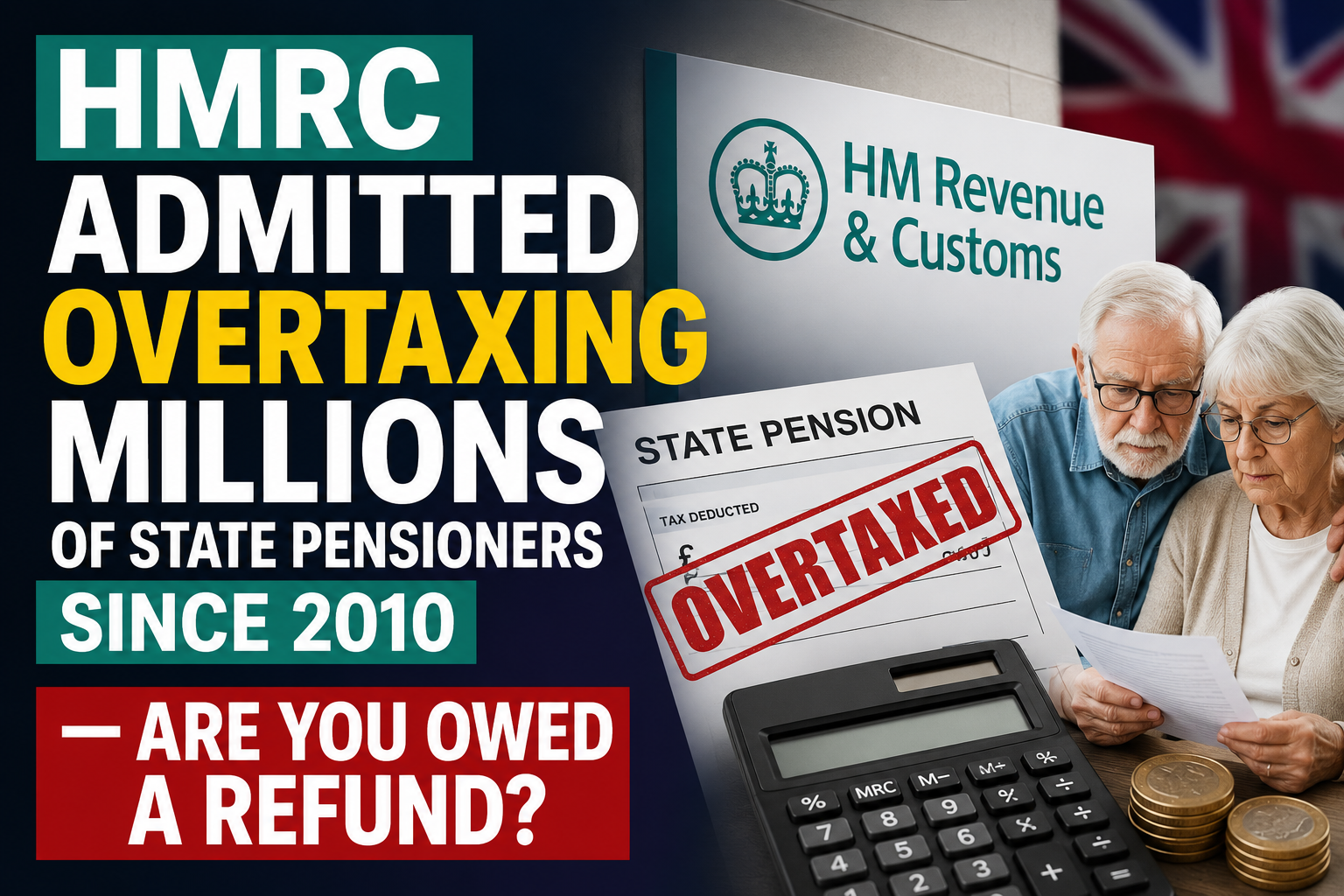
HMRC has confirmed it overtaxed up to 1.4 million pensioners due to an error dating back to 2010, and refunds are available through specific claim forms.

What HMRC Admitted
HMRC admitted it overtaxed 1.4 million pensioners after a mistake that went unnoticed for more than 15 years. The error dates back to a change made to HMRC’s systems in 2010 and has affected pensioners since the 2010-11 tax year. HMRC chief executive John-Paul Marks apologised in a letter to MPs, saying he was sorry for the error and especially for pensioners who were affected, according to GB News.
How The Error Happened
The mistake centres on how taxable State Pension income should be calculated. Under HMRC’s own guidance, the calculation should use 51 weeks of the current year’s State Pension rate and one week at the previous year’s lower rate. HMRC used the wrong State Pension figures when working out how much tax pensioners owed, based on details reported by GB News.
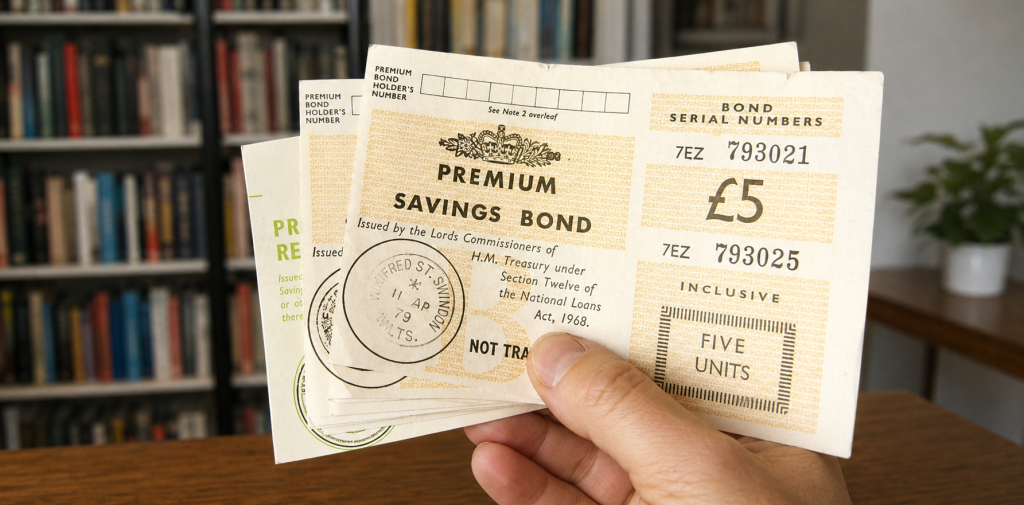
Premium Bonds Prize Checker 2026 – Check Your Numbers
You can check your Premium Bonds prizes for free on the NS&I website, the NS&I app, or by asking Alexa. All you need is…
How Many People Were Affected
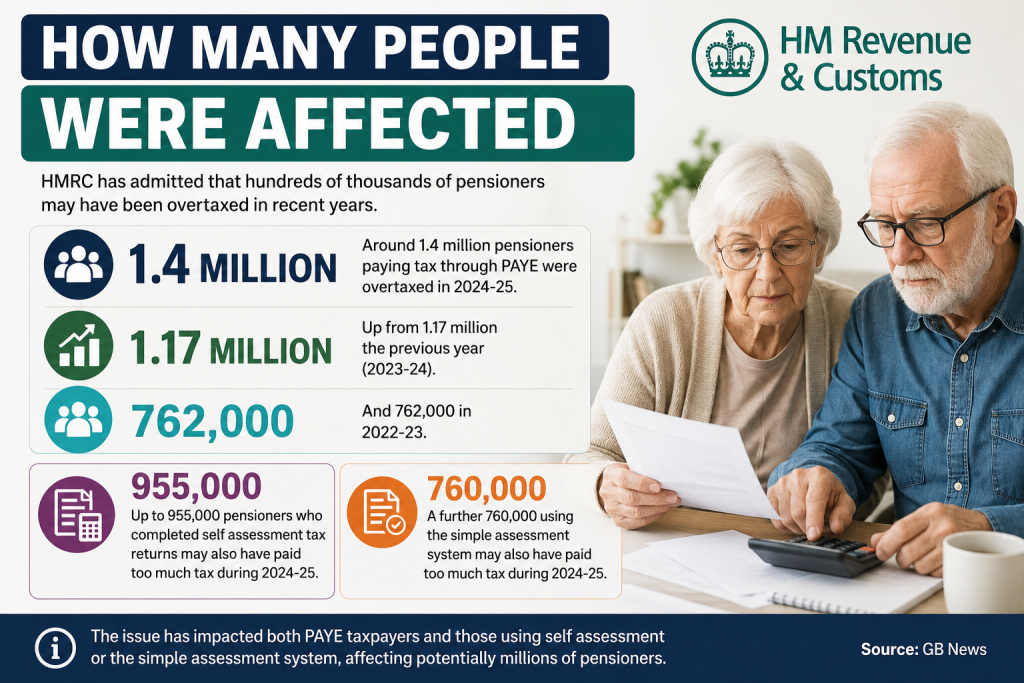
Around 1.4 million pensioners paying tax through PAYE were overtaxed in 2024-25, up from 1.17 million the previous year and 762,000 in 2022-23. The problem was not limited to PAYE taxpayers. Up to 955,000 pensioners who completed self assessment tax returns and a further 760,000 using the simple assessment system may also have paid too much tax during 2024-25, according to GB News.
How Much Money Was Involved
During the 2024-25 tax year alone, HMRC collected more than £2 million in extra tax from those affected. The average overpayment was around £2 per person for this specific State Pension calculation error, based on figures reported by GB News.
A Separate But Related Pension Tax Problem
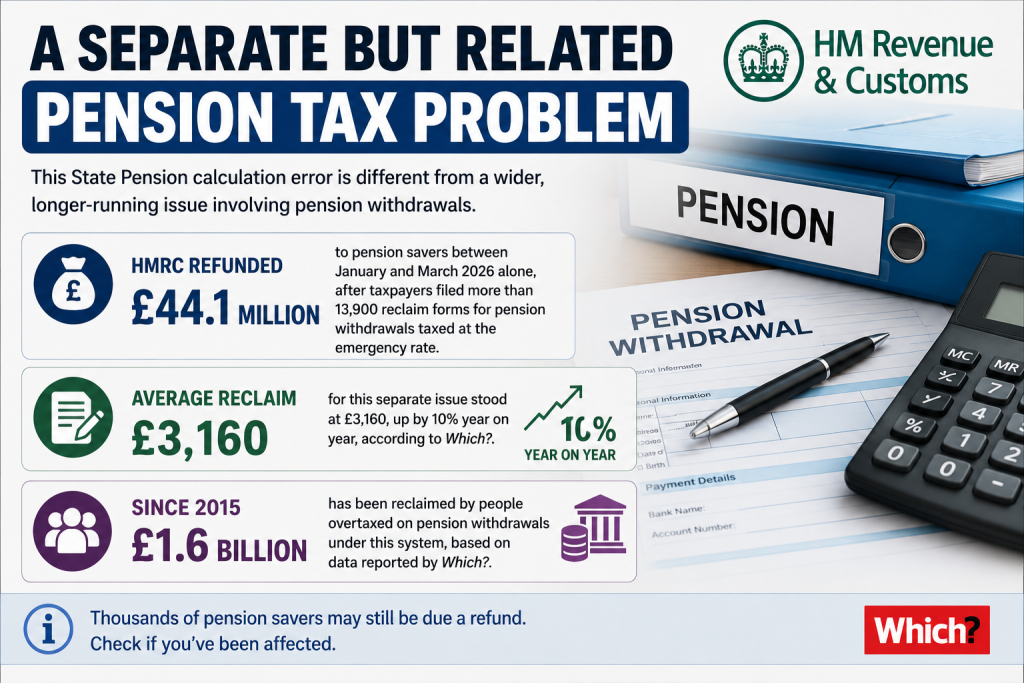
This State Pension calculation error is different from a wider, longer-running issue involving pension withdrawals. HMRC refunded £44.1 million to pension savers between January and March 2026 alone, after taxpayers filed more than 13,900 reclaim forms for pension withdrawals taxed at the emergency rate. The average reclaim for this separate issue stood at £3,160, up by 10 percent year on year, according to Which?. Since 2015, more than £1.6 billion has been reclaimed by people overtaxed on pension withdrawals under this system, based on data reported by Which?.
Does HMRC Give Automatic Refunds
HMRC has not committed to automatic refunds for the State Pension calculation error, citing administrative tolerances. Pensioners who believe they have overpaid must contact the tax office directly to seek reimbursement, according to GB News. For the separate pension withdrawal overtaxation issue, HMRC says a refund should arrive within 30 days once the correct form is submitted, based on details from Which?.
Which Form To Use For A Refund
The correct form for reclaiming overpaid pension withdrawal tax depends on individual circumstances. The table below explains which form applies to different situations.
| Situation | Form Needed |
|---|---|
| Fully withdrawn pension pot, still working or claiming benefits | P53Z |
| Fully withdrawn pension pot, not working or claiming benefits | P50Z |
| Only part of the pension pot withdrawn | P55 |
This guidance comes from GB News.
Steps HMRC Has Taken To Fix The Wider Problem
From April 2025, HMRC changed its process so that tax codes are automatically updated for individuals newly receiving a private pension, aiming to ensure correct tax is paid over the course of the year. HMRC announced this change in its Pension Schemes Newsletter, published on 23 January 2025, according to Which?. However, investment firm AJ Bell has warned that those who make a single ad-hoc withdrawal from their pension may still be left out of pocket despite this change, based on reporting from Which?.
FAQ Section for: “HMRC Admitted Overtaxing Millions of State Pensioners Since 2010 — Are You Owed a Refund?”
Q: Is it true that HMRC admitted overtaxing millions of state pensioners since 2010?
Yes. HMRC has acknowledged that a significant number of pensioners were overtaxed due to errors in how tax codes were applied to pension income, dating back over a decade. This affects people who had multiple income sources or whose tax codes weren’t updated correctly when they began receiving their state pension.
Q: Why did HMRC overtax state pensioners in the first place?
The issue largely stems from incorrect or outdated tax codes, particularly for pensioners with more than one source of income (such as a workplace pension plus the state pension). Because the state pension is paid without tax deducted at source, HMRC relies on accurate tax code adjustments elsewhere — and errors in this process led to many people paying more tax than they owed.
Q: How do I know if I was overtaxed?
You may have been affected if you receive income from multiple pensions, changed jobs or pension providers, or noticed inconsistencies in your annual tax code notices. Checking your P800 tax calculation (sent automatically by HMRC) or reviewing your Personal Tax Account online are good first steps.
Q: How can I claim a refund from HMRC?
You can:
>Check your online Personal Tax Account at gov.uk
>Wait for a P800 form, which HMRC issues automatically if it identifies an overpayment
>Contact HMRC directly by phone or post if you believe you’re owed money but haven’t received a P800
>Use form R40 if you need to actively claim a refund for a specific tax year
Q: How far back can I claim an overpayment?
Generally, HMRC allows claims for the past four tax years. However, given the scale of this issue, some pensioners are being encouraged to check further back, especially where HMRC’s own error is at fault.
Q: Will HMRC automatically refund me, or do I need to apply?
In many cases, HMRC will issue an automatic refund via a P800 letter. However, it’s strongly advised not to rely solely on this — many pensioners have found it necessary to proactively contact HMRC or check their account themselves.
Q: What should I do if I think I’ve been overtaxed but haven’t heard from HMRC?
Log into your Personal Tax Account, review your tax codes for the years in question, and contact HMRC’s helpline directly. Keeping payslips, P60s, and pension statements handy will help speed up any claim.












Comments 3