












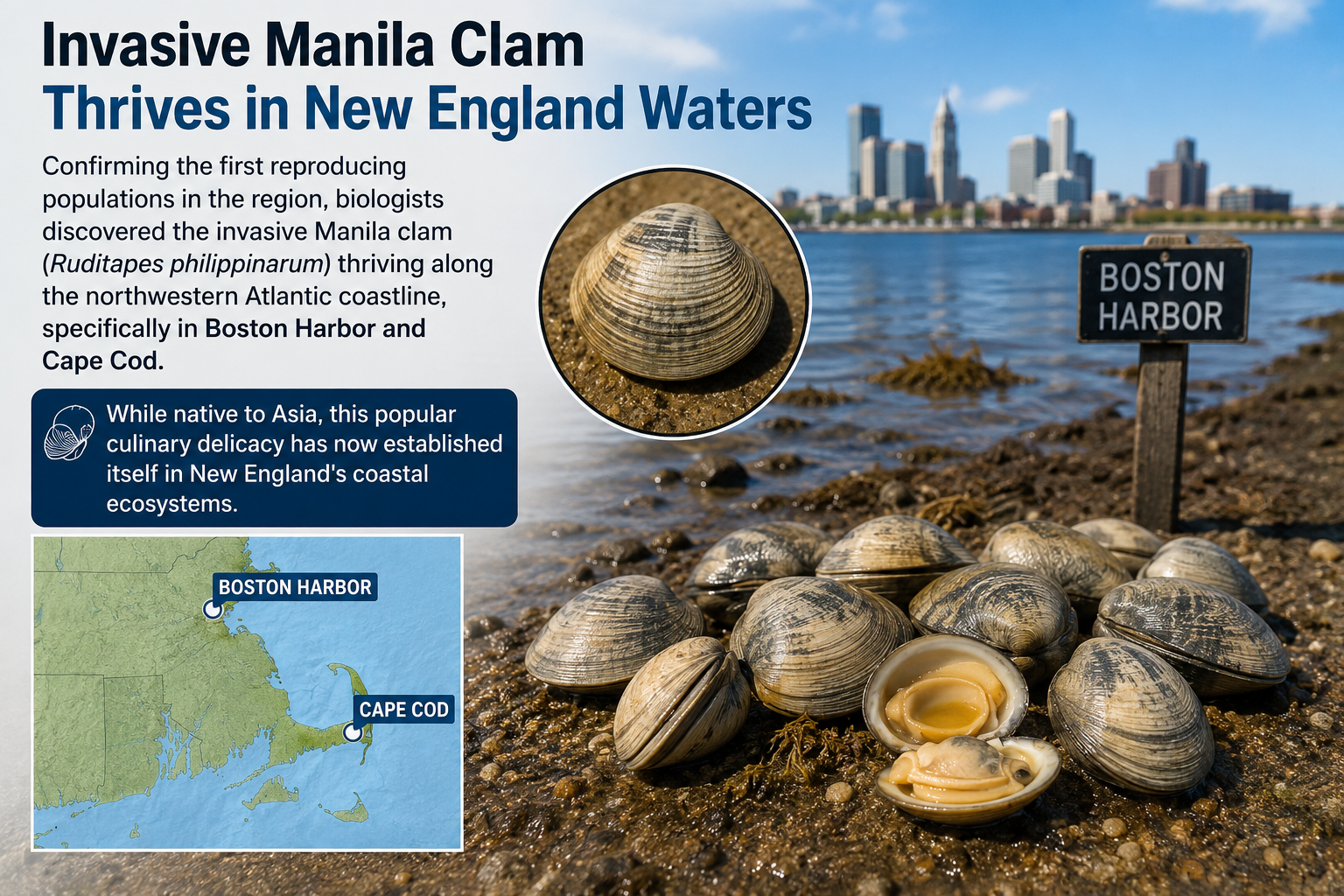
Scientists confirmed that the invasive Manila clam has established breeding colonies along the northeastern Atlantic coast, marking the final region in the Northern Hemisphere to be reached by this species.

How The Discovery Was Made
The finding began with reports of unusual clams near Provincetown in 2023. In the summer of 2025, marine scientist Aly Putnam received a text message from a former student describing similar clams found during a regional invasive species survey. This led to a two part investigation combining field surveys and lab testing, based on reporting from State House News Service via WBUR News. WBUR News
Who Confirmed The Findings
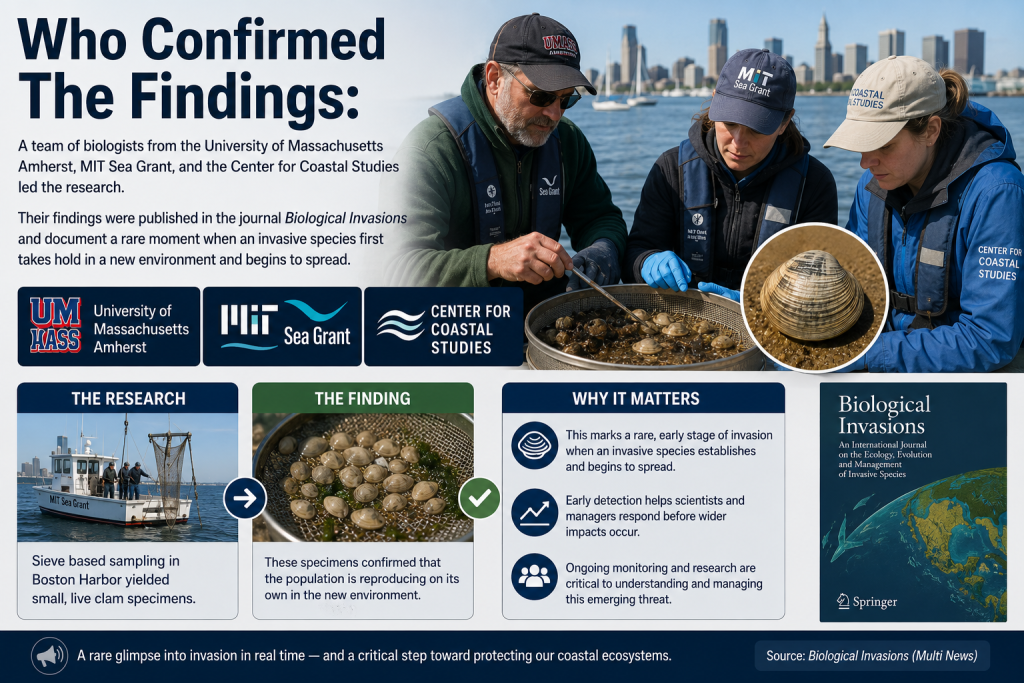
A team of biologists from the University of Massachusetts Amherst, MIT Sea Grant, and the Center for Coastal Studies led the research. Their findings were published in the journal Biological Invasions and document a rare moment when an invasive species first takes hold in a new environment and begins to spread. Sieve based sampling in Boston Harbor yielded small, live clam specimens, which confirmed that the population is reproducing on its own, according to MIT Sea Grant. Mit
Where The Clams Were Found
Field surveys confirmed live, reproducing Manila clam populations in Boston Harbor and on Cape Cod, based on findings reported by Phys.org. The study found that the Manila clam has made Cape Cod and the Boston area its new home, according to AOL. Phys.orgAOL
Where Manila Clams Originally Came From
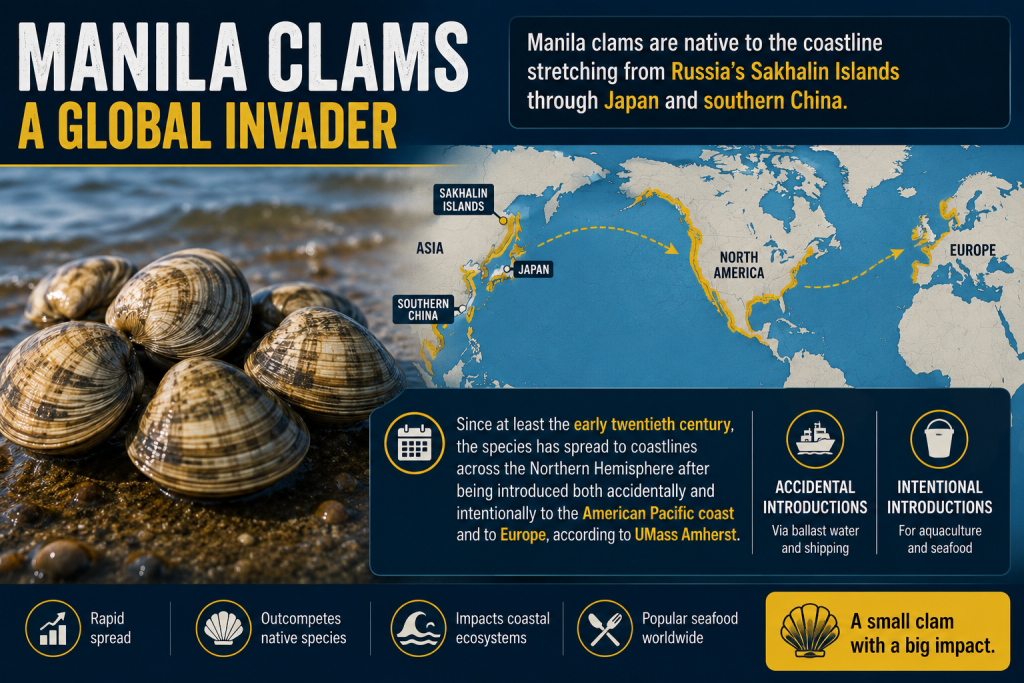
Manila clams are native to the coastline stretching from Russia’s Sakhalin Islands through Japan and southern China. Since at least the early twentieth century, the species has spread to coastlines across the Northern Hemisphere after being introduced both accidentally and intentionally to the American Pacific coast and to Europe, according to UMass Amherst.
HMRC Admitted Overtaxing Millions of State Pensioners Since 2010 — Are You Owed a Refund?
HMRC has confirmed it overtaxed up to 1.4 million pensioners due to an error dating back to 2010, and refunds are available through specific…

Why This Spread Matters
Manila clams are known to compete with native shellfish species, hybridize with related clam species, and change local ecological communities when they form dense colonies, based on reporting from Eco Magazine. At the same time, researchers say the news is not entirely negative. The clam could ease pressure on native species by giving seabirds, crabs, and other predators a new food source, according to WBUR News.
Economic Value Of Manila Clams
Manila clams support a seafood industry worth about seven billion dollars per year worldwide, according to AOL. Because the species is already farmed and eaten in many countries, its arrival in the Northeast could also create new commercial opportunities alongside the ecological concerns, based on reporting from Fox Weather. AOL
Long History Of Global Spread
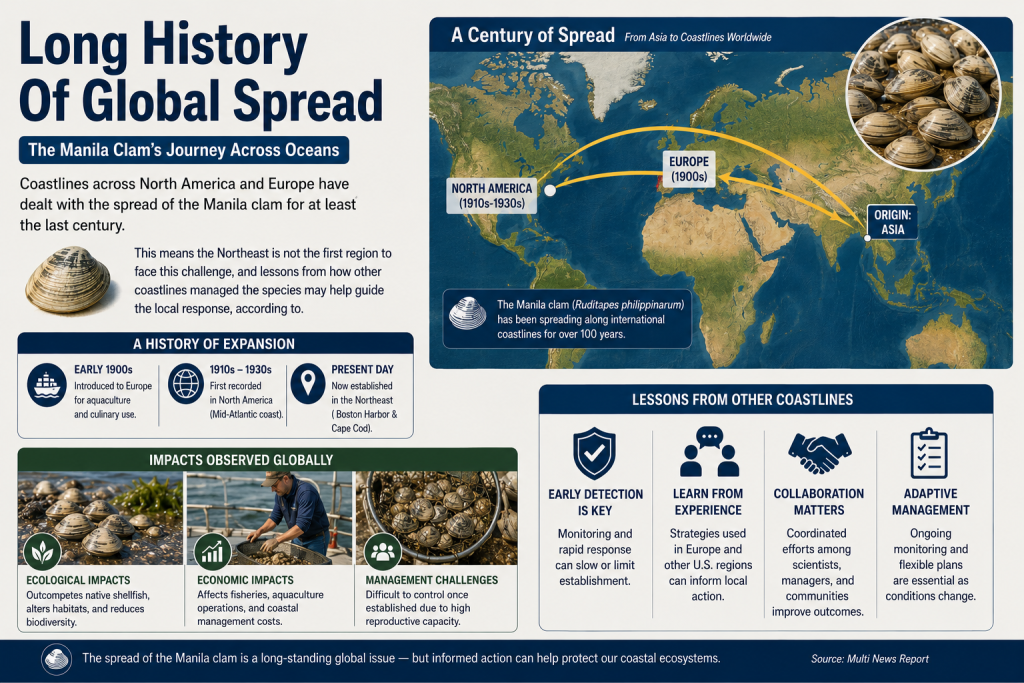
Coastlines across North America and Europe have dealt with the spread of the Manila clam for at least the last century. This means the Northeast is not the first region to face this challenge, and lessons from how other coastlines managed the species may help guide the local response, according to Popular Science. Popular Science
What Researchers Say Comes Next
Scientists describe this discovery as a rare chance to observe an invasive species during the earliest stage of establishing itself in a new region. Ongoing monitoring will track how quickly the clam population grows and spreads along the coast, and whether it begins to affect native shellfish numbers, based on findings from UMass Amherst College of Natural Sciences.
FAQ: Manila Clam Spreading Atlantic Coastline
Q. What is the Manila clam, and why is it spreading along the Atlantic coastline?
The Manila clam (Ruditapes philippinarum) is a small, fast-growing bivalve native to the Indo-Pacific region. It was introduced to Atlantic coastal waters — including parts of Europe and North America — primarily through aquaculture and accidental transport in ballast water or with oyster shipments. Once established, its rapid growth rate, high reproductive output, and tolerance for a wide range of salinity and temperature conditions have allowed it to spread well beyond its original farming sites.
Q. Is the Manila clam considered an invasive species?
In many regions outside its native range, yes. While it’s valued commercially in aquaculture, the Manila clam is classified as invasive or non-native in areas like parts of the European Atlantic coast, where it competes with native clam and shellfish species for space, food, and habitat.
Q. What ecological effects does the Manila clam have on coastal ecosystems?
Key impacts include:
Competition with native species
particularly native clams like the carpet shell clam, for sediment habitat and food resources.
Altered sediment composition
burrowing activity can change the texture and stability of intertidal sediments.
Filter-feeding pressure
as efficient filter feeders, dense Manila clam populations can affect local plankton availability, indirectly impacting other filter feeders.
Potential disease or parasite transfer
introduced populations can sometimes carry pathogens that affect native shellfish.
Q. Does the spread of Manila clams affect local fisheries or aquaculture?
It can go both ways. In some areas, Manila clams have become a commercially valuable catch, supporting local fisheries. In others, their spread raises concerns about long-term effects on native shellfish stocks and the broader shellfish farming industry, since unmanaged wild populations can complicate regulation and harvest quotas.
Q. Can the spread of Manila clams be controlled or managed?
Management approaches vary by region and typically include monitoring population density, regulating harvest to prevent unchecked commercial exploitation, and researching containment strategies in sensitive habitats. Complete eradication is generally considered impractical once a population is well established, so most efforts focus on mitigation and monitoring.
Q. Are Manila clams safe to eat if harvested from the wild along the Atlantic coast?
Generally yes, provided they’re harvested from waters that meet local food safety and water quality standards. As with any wild shellfish, it’s important to check local advisories, since clams can accumulate toxins or contaminants depending on water conditions in a given area.
Q. How does climate change relate to the Manila clam’s spread along the Atlantic coastline?
Warmer coastal waters and shifting temperature ranges can expand the range of suitable habitat for the Manila clam, potentially accelerating its spread into new areas that were previously less hospitable to the species.