






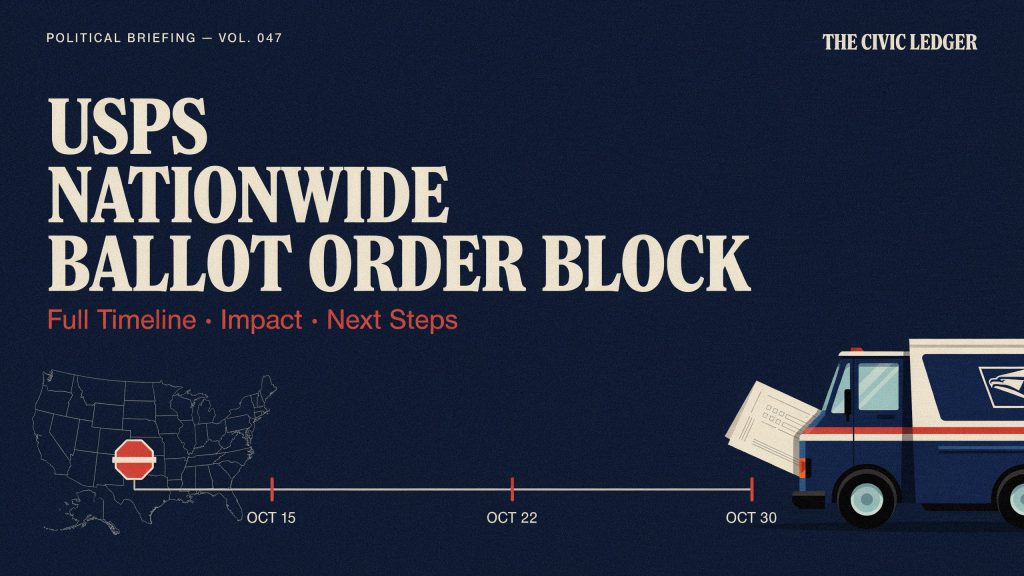
USPS cannot block mail-in ballots. Two federal judges have ruled against the Trump administration’s plan, and the block now applies nationwide.

What USPS Tried To Do
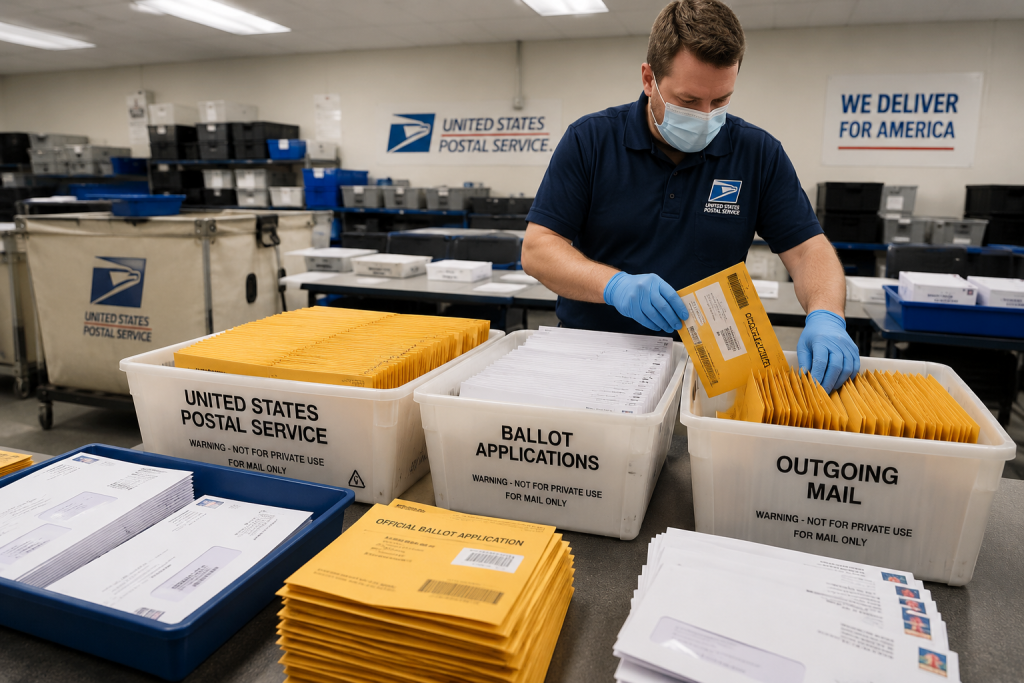
On May 29, USPS proposed a rule that would require states to hand over voter lists and adopt specific envelope designs before the agency would deliver mail-in ballots. States that refused would face outright refusal of ballot delivery. The rule came from a March 31, 2026 executive order called “Ensuring Citizen Verification and Integrity in Federal Elections,” which directed USPS to create a list of approved mail voters and refuse ballots from anyone not on that list. EciksAmerican Civil Liberties Union
Postmaster General David Steiner confirmed the plan directly to Congress. When Senator Gary Peters asked whether USPS would still mail ballots for a state that refused to turn over its voter list, Steiner did not give a clear no. That answer became the turning point that pushed courts to act. NPR
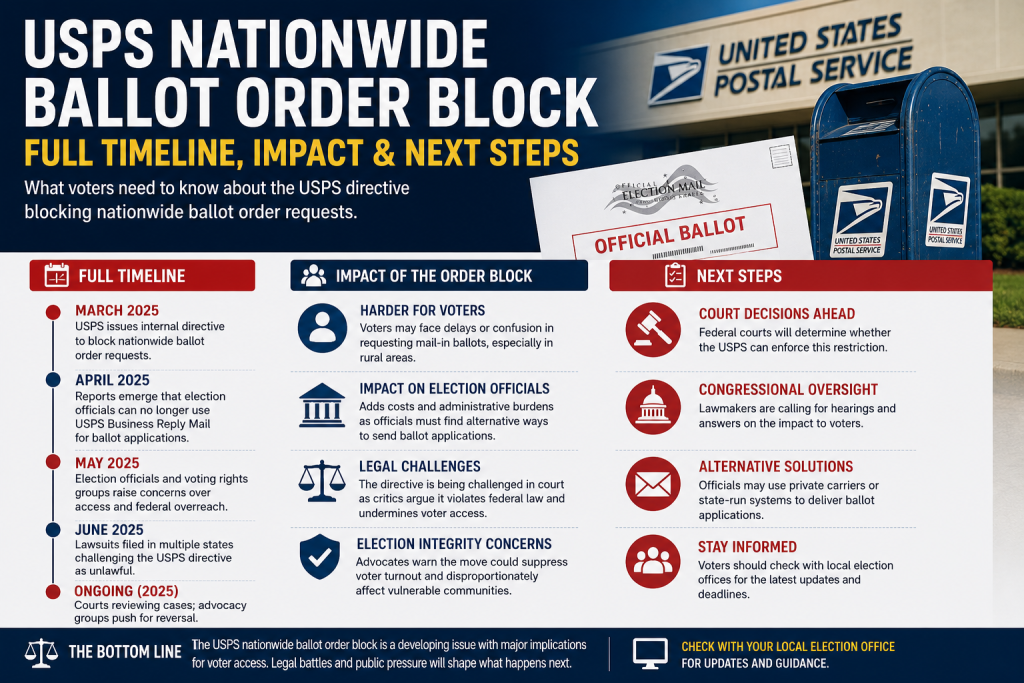
Full Timeline
| Date | Event |
|---|---|
| March 31, 2026 | Trump signs executive order directing DHS and USPS to build citizen and voter-eligibility lists |
| Late May 2026 | A different federal judge declines to block the order, saying the challenge is premature since USPS had not yet acted |
| May 29, 2026 | USPS proposes the contested rule tying ballot delivery to voter list handovers and envelope rules |
| Early June 2026 | NAACP, through the Legal Defense Fund and Public Citizen Litigation Group, files a motion arguing the rule breaks a 2021 settlement |
| June 25, 2026 | Judge Indira Talwani rules that USPS cannot refuse to mail absentee ballots, saying no law gives USPS authority over mail-in voting |
| Late June 2026 | Steiner tells Congress USPS’s plan would not guarantee ballot delivery for states withholding voter data |
| July 1, 2026 | Judge Emmet Sullivan issues a nationwide ruling blocking the USPS restrictions in every state, not just those that sued |
| July 2, 2026 | The Trump administration formally appeals, asking Judge Talwani to lift her ruling quickly, arguing USPS is running out of time before November |
Why The Courts Blocked The Rule
Two separate rulings stopped the USPS plan, and each used different legal grounds.
Judge Talwani’s ruling focused on constitutional limits. She wrote that the Constitution does not give the President specific powers over elections, and that the power to decide voter eligibility belongs to the states alone. She found the order’s instruction to USPS to build its own voter lists and block ballots from people not on those lists was an improper move by the executive branch into a power that belongs to the states. She also noted that Congress has never given USPS legal authority to control mail-in voting. Judge blocks Trump order that would have let USPS refuse to deliver mail ballots – Democracy Docket +2
Judge Sullivan’s ruling focused on a legal settlement. He said the proposed rule violated a prior settlement between the NAACP and USPS to ensure timely, reliable ballot delivery, and gave three reasons the rule did not fit that agreement, including that USPS cannot refuse to accept and deliver certain ballots under the settlement. That settlement came out of a 2020 NAACP lawsuit over mail delays, and it requires USPS to take extraordinary steps to protect election mail through 2028. Sullivan’s order applies nationwide, covering every state rather than only the ones that filed suit. Judge blocks Trump’s USPS mail-in ballot changes +2
Who Sued And Why
Twenty-three Democratic-led states plus Washington, D.C. filed suit against the order. Election officials warned the changes could disrupt voting in states where mail is not a backup option but the main way people vote. Colorado election clerk Amanda Gonzalez said her state had already told the Trump administration it would not hand over voter data, calling the USPS rule a disguised way to get that data anyway. The States That Could Clash With USPS Over Mail-In Ballots – Newsweek +2
Civil rights groups raised a separate concern about fairness. The NAACP said the proposed changes would create unlawful barriers that could hit Black voters harder, since they rely on mail voting more often due to long-standing access gaps. Common Dreams
Impact On Voters
| Group Affected | Why It Matters |
|---|---|
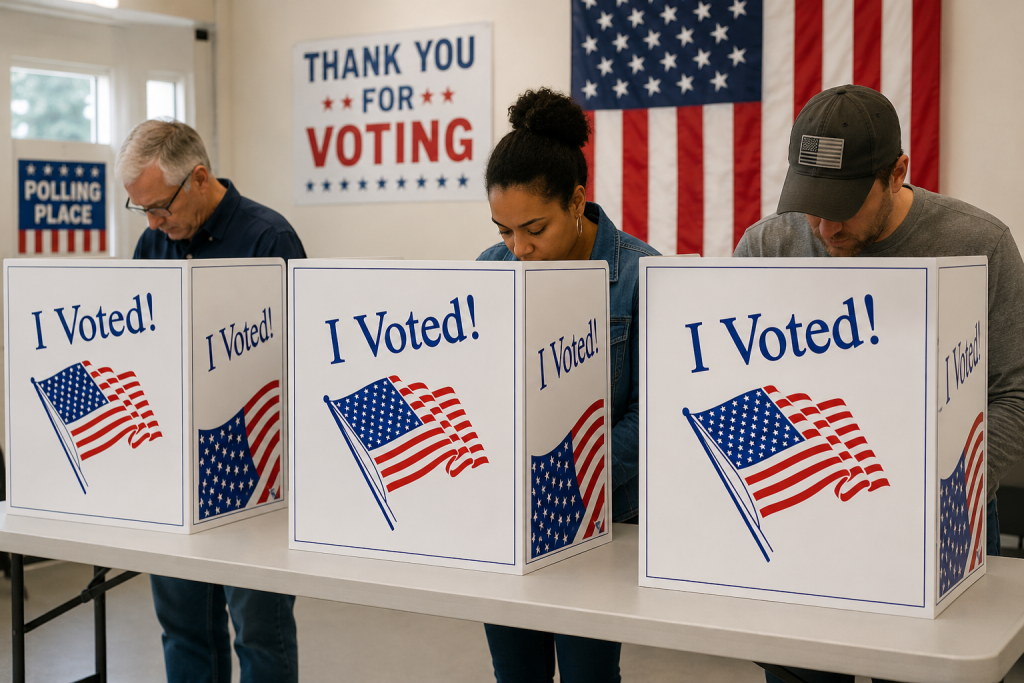
| General mail voters | More than 48 million Americans voted by mail in 2024, about one in three voters nationwide |
| Military and overseas voters | These voters depend heavily on mail ballots and would face added risk under the blocked rule |
| Elderly and disabled voters | Also named as groups that rely on mail voting and would be most affected if the order took effect |
| States relying on mail as the primary system | Some states use mail voting as their main method, not a backup, making disruption more serious there |
What Happens Next
The fight is not over. The Trump administration is appealing Judge Talwani’s ruling and has asked her to lift the block quickly, arguing that USPS cannot realistically build a system with different rules for different states before November. The D.C. Circuit Court of Appeals is expected to weigh in this summer, and its decision could determine whether the USPS rule can move forward before the midterms. VotebeatNewsweek
Analysts point to a few signals worth watching. Whether USPS actually builds a working voter-list portal, whether DHS releases the citizenship lists it promised, and whether any states agree to hand over federal data will all shape how this plays out. Newsweek
Legal commentary also flags a strategic risk. One possible outcome is that the administration loses in court but not in time for the midterms, letting the Justice Department delay a final decision until USPS and DHS plans are already in motion or states have taken steps to comply. Lawfare
Quick Reference
| Question | Answer |
|---|---|
| Is USPS currently blocking any ballots? | No, both rulings stop the block nationwide |
| Does the block apply to all 50 states? | Yes, Sullivan’s July 1 ruling covers every state |
| Is the ruling final? | No, the administration is appealing |
| What law was the plan based on? | A March 31, 2026 executive order, not an act of Congress |
| Who filed the main lawsuits? | The NAACP, 23 states, Washington D.C., and voting rights groups including the ACLU |