












“MAHA farmers” means farmers who support or take part in the Make America Healthy Again movement. This movement, led by Health Secretary Robert F. Kennedy Jr., pushes for regenerative farming and less use of pesticides like glyphosate.

What Is the MAHA Movement
The Make America Healthy Again movement started after President Trump signed Executive Order 14212 in February 2025, which set up the Make America Healthy Again Commission to address the childhood chronic disease crisis. The order also directed federal agencies to work with farmers so that food produced in the United States stays healthy, plentiful, and affordable. White HouseWhite House
The movement links diet, farming methods, and health outcomes. HHS Secretary Robert F. Kennedy Jr. has said that making America healthy again starts with understanding that health begins long before someone visits a doctor, and that it starts with the food people eat and how it is grown. World Grain
Who Are MAHA Farmers
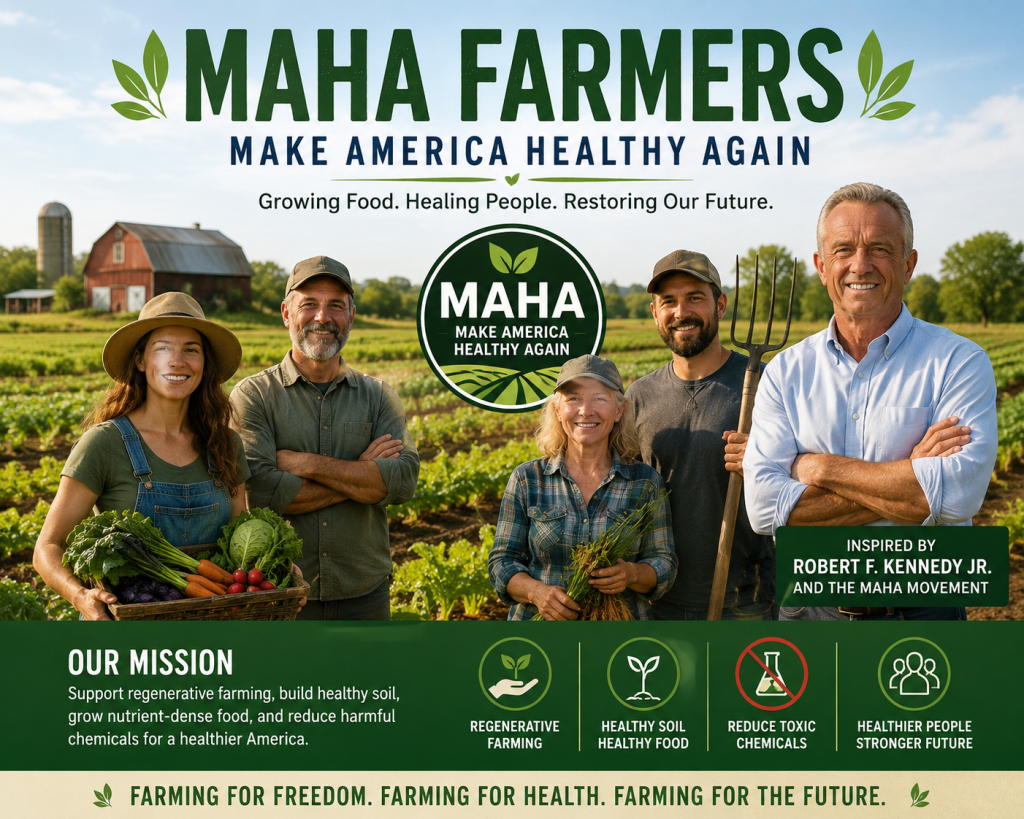
MAHA farmers are producers who back this movement’s goals. Many of them focus on soil health, cutting down chemical use, and growing food using methods seen as more natural. American farmers and ranchers have always cared for their land, and more of them are now interested in regenerative agriculture practices. White House
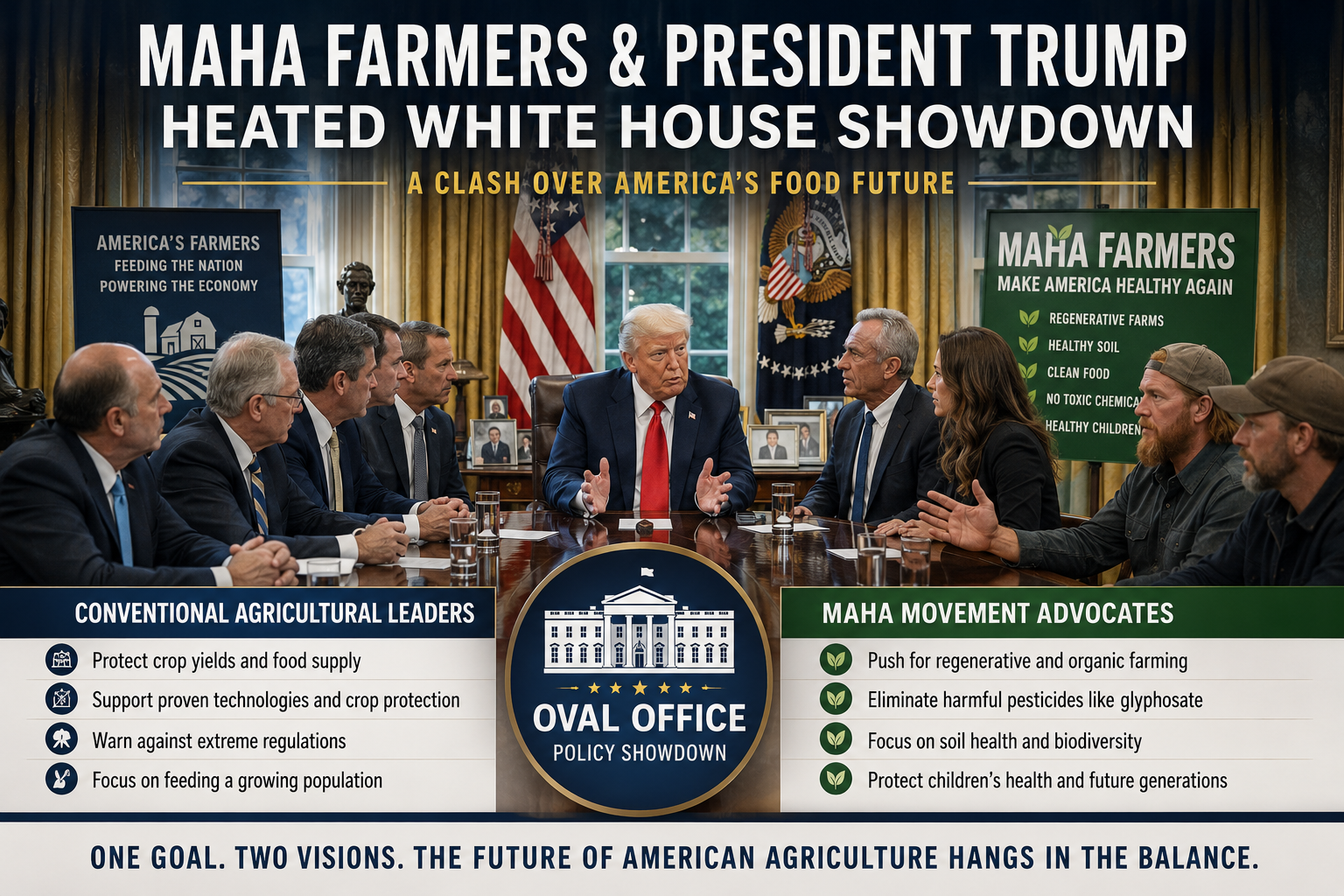
Some MAHA farmers already use regenerative methods on their farms. Four leading regenerative farmers joined Kennedy, Agriculture Secretary Brooke Rollins, and President Trump at the White House in June 2026 to discuss how regenerative agriculture can improve soil health, farm resilience, profitability, and rural prosperity. World Grain
Regenerative Farming Practices MAHA Supports
Regenerative agriculture is a farming style built around protecting the land while keeping farms profitable. It is a sustainable approach that protects and improves soil health, biodiversity, climate, and water resources while supporting market opportunities for farmers and their communities. World Grain
Common regenerative practices linked to the MAHA movement include the following.
| Practice | Purpose |
|---|---|
| Cover cropping | Protects soil between growing seasons |
| Rotational grazing | Improves pasture health and animal welfare |
| Diversified crop rotations | Reduces pest pressure and soil depletion |
| Reduced tillage | Preserves soil structure and carbon |
| Lower chemical input use | Cuts reliance on synthetic pesticides |
Expanded funding for voluntary conservation programs, such as EQIP and CSP, gives producers who want to try regenerative practices, including cover cropping, rotational grazing, or diversified crop rotations, the financial support to make it possible. AgAmerica
MAHA’s Stance on Glyphosate and Pesticides
Glyphosate, sold under the brand name Roundup, is one of the most used herbicides in American farming. The MAHA movement has raised questions about its safety. The first MAHA report raised concerns about pesticides such as glyphosate and atrazine, and it also questioned ingredients like seed oils, high fructose corn syrup, and artificial dyes. AgAmerica
However, the government’s official position has stayed measured. The federal MAHA Commission has limited itself to calling for more research on the health effects of pesticides, rather than banning them or setting new limits. The second MAHA commission strategy report focused on research and support for precision agriculture technology and did not propose any restriction on pesticide use. AgAmericaThe Breakthrough Institute
Kennedy’s own tone on the subject has shifted over time. He has softened his language on glyphosate specifically, even though the EPA has not moved to restrict it, while other MAHA figures such as Vani Hari and Zen Honeycutt continue to push for tighter pesticide rules. The Breakthrough Institute
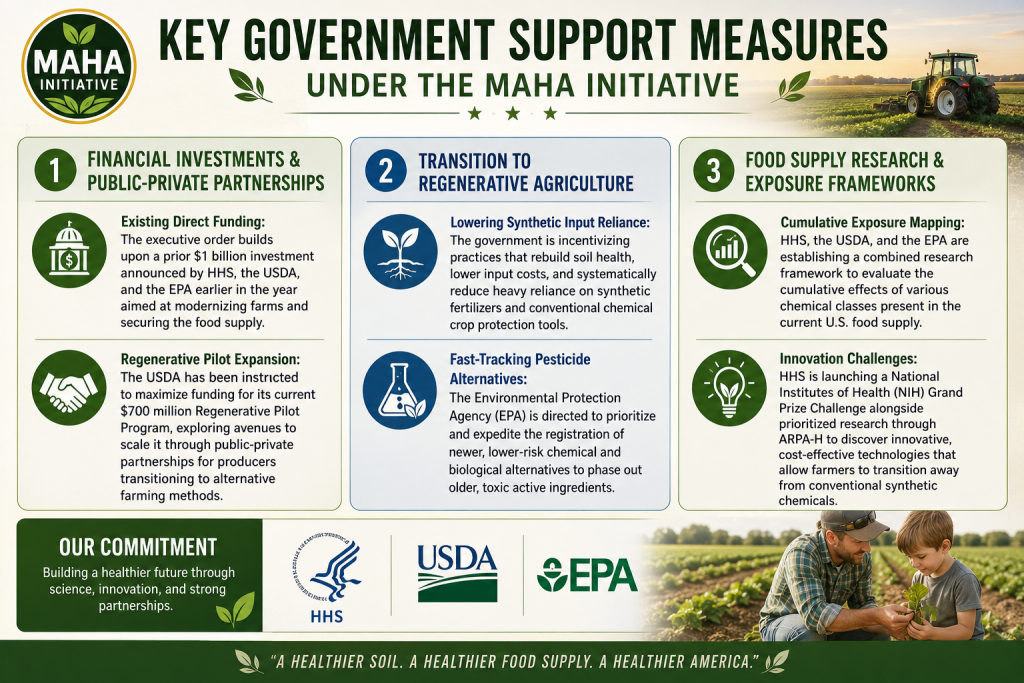
MAHA Initiative: Key Government Support Measures You Should Know
. Financial Investments & Public-Private Partnerships: A 2026 Guide to Smarter Infrastructure Funding
- Existing Direct Funding: The executive order builds upon a prior $1 billion investment announced by HHS, the USDA, and the EPA earlier in the year aimed at modernizing farms and securing the food supply.
- Regenerative Pilot Expansion: The USDA has been instructed to maximize funding for its current $700 million Regenerative Pilot Program, exploring avenues to scale it through public-private partnerships for producers transitioning to alternative farming methods.
. How to Make the Transition to Regenerative Agriculture (Step-by-Step)
- Lowering Synthetic Input Reliance: The government is incentivizing practices that rebuild soil health, lower input costs, and systematically reduce heavy reliance on synthetic fertilizers and conventional chemical crop protection tools.
- Fast-Tracking Pesticide Alternatives: The Environmental Protection Agency (EPA) is directed to prioritize and expedite the registration of newer, lower-risk chemical and biological alternatives to phase out older, toxic active ingredients.
Understanding Food Supply Research & Exposure Frameworks in Modern Food Safety
- Cumulative Exposure Mapping: HHS, the USDA, and the EPA are establishing a combined research framework to evaluate the cumulative effects of various chemical classes present in the current U.S. food supply.
- Innovation Challenges: HHS is launching a National Institutes of Health (NIH) Grand Prize Challenge alongside prioritized research through ARPA-H to discover innovative, cost-effective technologies that allow farmers to transition away from conventional synthetic chemicals.
These regenerative practices are described as strengthening soil health, lowering input costs, improving chemical efficiency, maintaining yields, increasing market value, and strengthening rural economies. White House
Concerns Raised by Agriculture Groups
Not everyone in farming supports the MAHA approach. Some agricultural groups criticized the first MAHA report as filled with fear based information about pesticides rather than science based information. Farm groups also pointed out that farmers were left out of that first report and were not consulted on the complexities of agriculture. AgAmericaAmerican Farm Bureau Federation
Later reports tried to fix this gap. The final MAHA strategy reflected a better understanding of how food is grown and highlighted science based improvements instead. Deputy Agriculture Secretary Stephen Vaden also promised that farmers would have a strong voice in future MAHA reports. American Farm Bureau FederationAgAmerica
Some researchers warn that a large scale shift away from conventional farming could raise costs. One estimate found that banning glyphosate could raise farmer costs by 654 million dollars a year for corn, 849 million for soybeans, 409 million for wheat, and 22 million for cotton. Critics argue this kind of shift could raise food prices and reduce farm output, while supporters say the long term health and environmental gains are worth the change. The Breakthrough Institute