












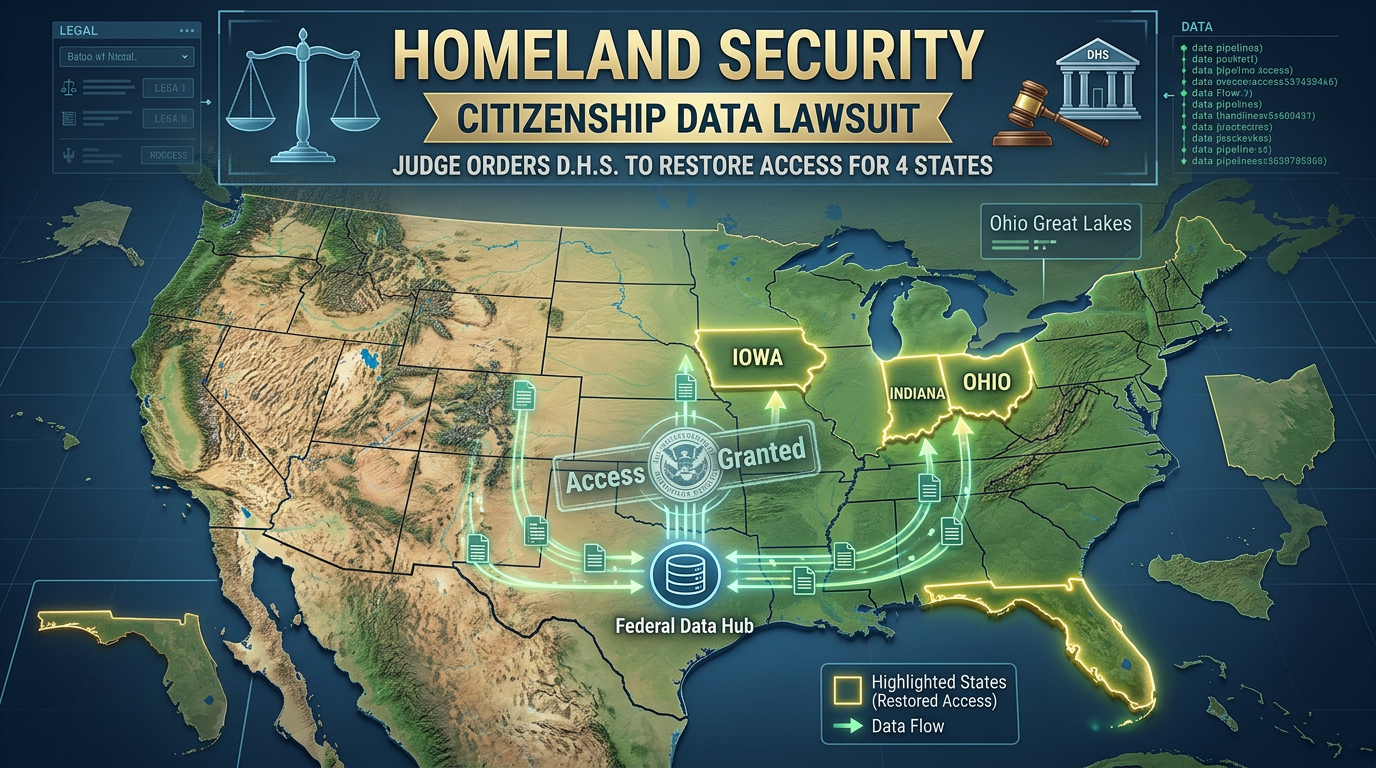
A federal judge in Florida has ordered the Department of Homeland Security Citizenship Data Lawsuit | to restore citizenship verification tools for four states, creating a legal conflict with a separate court ruling in Washington, D.C.

What The Ruling Says
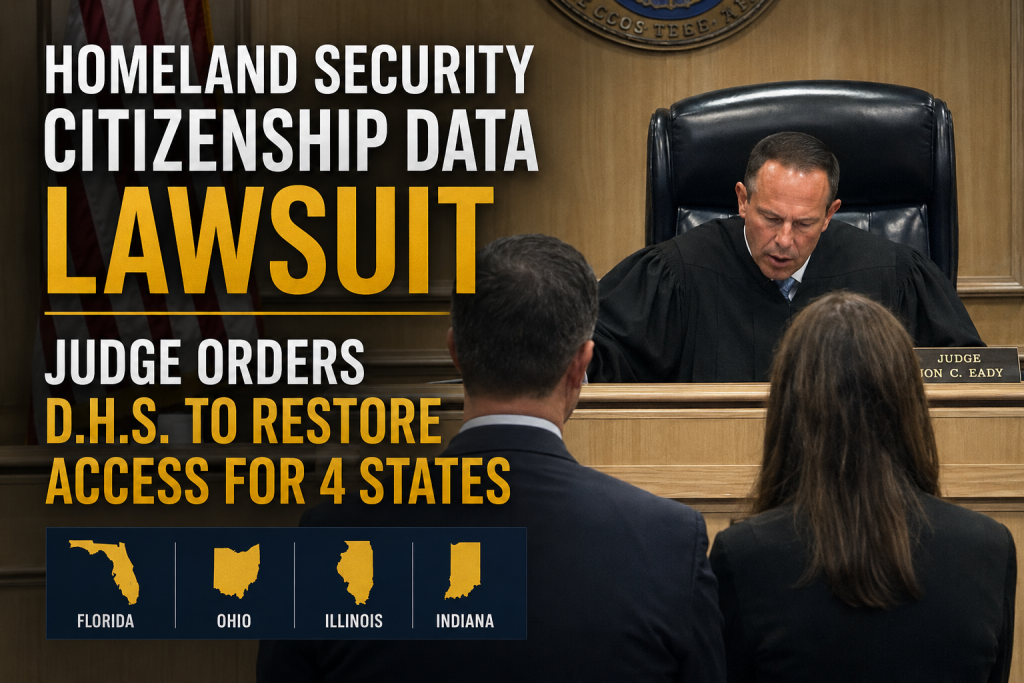
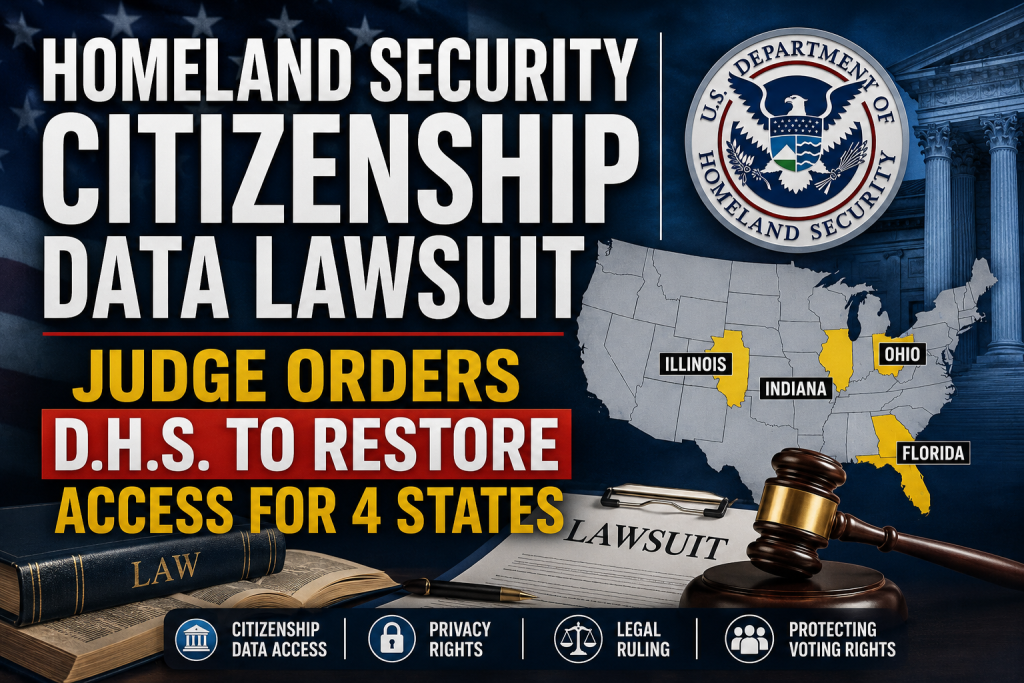
U.S. District Judge T. Kent Wetherell II issued the ruling on July 7, 2026. He granted an emergency request from Florida, Ohio, Iowa, and Indiana to enforce a settlement agreement with DHS. The judge ordered the department to immediately restore bulk upload and Social Security number search features in a federal database, according to News4Jax.
The Database At The Center Of The Case
The dispute involves the Systematic Alien Verification for Entitlements system, known as SAVE. This federal database lets state and local governments check a person’s immigration or citizenship status. States use it for tasks like verifying voter eligibility and confirming citizenship for professional license applicants, according to CrispNG.
How The Lawsuit Started
Florida first sued DHS in October 2024. The state argued that SAVE was inadequate because it required a unique immigration identifier and could not run searches using common information like a Social Security number or driver’s license number. Ohio, Iowa, and Indiana later joined the case, according to News4Jax.
Iron Bird Seed | Premium Nutrition Blend for Healthier, Happier Birds
Iron Bird Seed” is marketed as a nutrient-dense blend designed to boost birds’ energy levels and strengthen their immune systems, thanks to a mix…

The Settlement Agreement
The lawsuit was resolved in November 2025 through a settlement. DHS agreed to upgrade SAVE by connecting it with the Social Security Administration, allowing searches using full or partial Social Security numbers. The agreement also added a bulk upload feature so states could submit many requests at once instead of one by one. DHS carried out these upgrades between December 2025 and June 2026, according to News4Jax.
Why DHS Turned The Features Off
On June 22, 2026, a separate judge in Washington, D.C., ruled against the expanded SAVE system. U.S. District Judge Sparkle Sooknanan found that the changes violated the Social Security Act, the Privacy Act of 1974, and the Administrative Procedure Act. She wrote that the federal government had trampled on the privacy rights of American citizens in a way that threatens the right to vote. DHS disabled the bulk upload and Social Security number search functions the next day in response to her order, according to YourNews.
What The States Said They Lost
Florida, Ohio, and Iowa each filed court statements describing specific harm from losing access to the tools. Iowa said it could no longer follow a state law requiring citizenship checks for professional license applicants. Florida and Ohio said they could not meet state requirements for verifying the citizenship status of registered voters, according to Rolling Out.
How Judge Wetherell Ruled Against The Other Court’s Reasoning
Judge Wetherell directly disagreed with parts of Judge Sooknanan’s legal analysis. On the Social Security Act, he pointed to a separate immigration law, 8 U.S.C. § 1373(a), which he said allows sharing of citizenship and immigration status information despite other federal restrictions. On the Privacy Act, he found that using Social Security numbers to check for possible noncitizen status falls under a recognized government use exception, according to News4Jax.
Two Courts, Two Different Outcomes
The case leaves two federal district courts with conflicting positions on the same legal question. No appeals court has yet ruled on which decision should control. Wetherell ordered both sides to file a status report within seven days detailing compliance progress, according to Rolling Out.
What Voting Rights Groups Are Arguing
The League of Women Voters and the Electronic Privacy Information Center brought the original Washington, D.C. case. These groups argue that using SAVE for large scale voter eligibility checks violates federal privacy protections and risks wrongly flagging eligible citizens as noncitizens. They have criticized DHS for asking one court to pause its ruling while telling another court it had no obligation to comply with that same ruling, according to Democracy Docket.
States Covered By The Order
| State | Role In Case |
|---|---|
| Florida | Original plaintiff, filed lawsuit in October 2024 |
| Ohio | Joined settlement, reported loss of voter verification ability |
| Iowa | Joined settlement, reported loss of professional license verification |
| Indiana | Joined settlement, covered under enforcement order |
FAQ: Homeland Security Citizenship Data Lawsuit — Judge Orders D.H.S. to Restore Access for 4 States
Q: What is the Homeland Security citizenship data lawsuit about?
A: The case centers on the SAVE (Systematic Alien Verification for Entitlements) system, a federal database DHS maintains to verify immigration status. Florida originally sued DHS in October 2024, arguing the system was inadequate because it required a unique immigration identifier and couldn’t run queries using common identifiers like Social Security numbers or driver’s license numbers.
Q: Which states were affected by the ruling?
Q: Why did DHS shut down states’ access in the first place?
A: DHS disabled both the bulk upload and Social Security number search functions on June 23, 2026, after a federal judge in Washington, D.C. vacated the system’s modifications in a separate case. That ruling, from Judge Sparkle L. Sooknanan, found the SAVE system’s modifications violated the Social Security Act and the Privacy Act.
Q: What harm did states say they experienced?
Q: What did Judge Wetherell actually order?
A: U.S. District Judge T. Kent Wetherell II issued the ruling on July 7, granting an emergency motion filed by Florida, Ohio, Iowa and Indiana to enforce their prior settlement agreement with DHS, directing DHS to immediately reinstate the states’ access to the bulk-upload and SSN-search features in the SAVE system.
Q: Why do the two court rulings conflict?
A: Wetherell directly disputed the legal analysis behind the Washington ruling. On the Social Security Act, he pointed to a separate federal immigration statute that expressly permits sharing citizenship and immigration status information despite general restrictions elsewhere in federal law. On the Privacy Act, he concluded that using Social Security numbers to verify potential noncitizen status falls under a recognized exception for routine government use.
Q: Did Judge Wetherell acknowledge the conflict with the D.C. ruling?
A: Yes. Wetherell said, “The Court understands that this puts Defendants in a bind because they are subject to two contradictory orders—one from this Court requiring them to include certain features in the SAVE system and one from Judge Sooknanan prohibiting them from doing so.” He added that his court was not bound by Sooknanan’s ruling and disagreed with her conclusions.
Q: Why did Judge Sooknanan block the SAVE system expansion in the first place?
A: Sooknanan wrote that federal agencies had worked over the past year to create a centralized database containing Social Security numbers, citizenship status and other sensitive data on U.S. citizens, scrambling to comply with an executive order aimed at reshaping federal elections. She argued this risked removing U.S. citizens from voter rolls based on inaccurate information.
Q: Does this ruling end the legal dispute?
A: No. The ruling does not resolve the broader legal dispute over the SAVE system, which remains the subject of litigation in federal courts. Wetherell also required both sides to file a status report within seven days detailing compliance progress and updates on the related Washington case, including any potential appeal.