












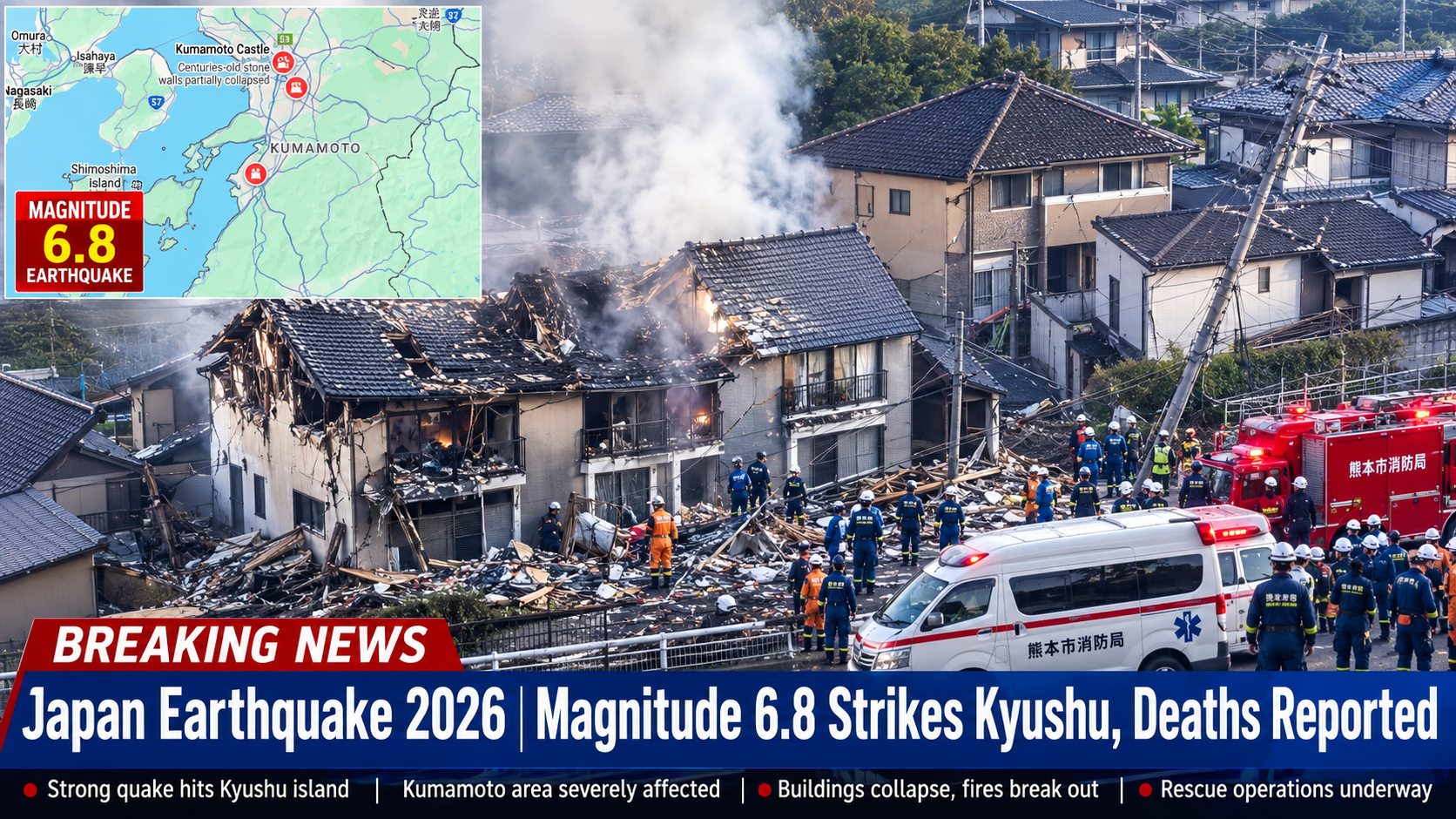
A magnitude 6.8 earthquake hit Kumamoto prefecture on Japan’s Kyushu island on July 28, 2026, killing several people and injuring dozens. The quake also triggered an explosion at a shopping mall, where rescue teams are still searching for survivors.

What Happened During The Earthquake
The earthquake struck at 4:27 p.m. local time on July 28, 2026. The Japan Meteorological Agency measured the quake at magnitude 7.1, while the United States Geological Survey recorded it as magnitude 6.8. The epicenter was about 12 miles south of Kumamoto city, close to Uto City, at a shallow depth of around 10 kilometers. This shallow depth is one reason the shaking felt so strong across the region. (CNN)
Where The Earthquake Struck
The quake hit Kumamoto prefecture, located on Kyushu, the southwesternmost of Japan’s four main islands. Kyushu is about 550 miles from Tokyo. This same region was hit by a series of deadly earthquakes in 2016 that killed hundreds of people and damaged the historic Kumamoto Castle. Many buildings in the area were still recovering from that earlier disaster. (CNN)
Death Toll And Injuries
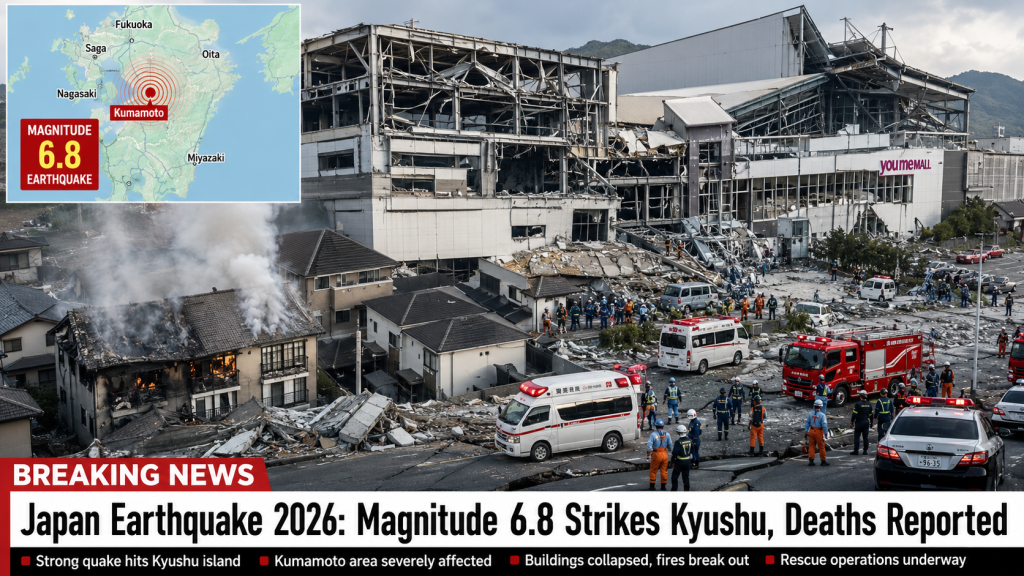
As of early reports, at least two deaths were confirmed, and officials expect the number to rise as rescue work continues in the hardest-hit areas. Dozens of people were injured across the prefecture. A local hospital, Saiseikai Kumamoto Hospital, said it was already at full capacity and suspended planned hospital admissions to focus on emergency cases. (Modern Tokyo Times)
Mall Explosion And Missing Workers
One of the most serious incidents happened at AEON Mall Kumamoto, where the earthquake caused part of the building to collapse, followed by an explosion. Police sources told local broadcasters that several people are believed to have died in the collapse. Around 20 to 30 mall employees could not be reached after the incident, raising fears that some may be trapped inside the damaged structure. (NBC News)
Tsunami Warning Issued And Lifted
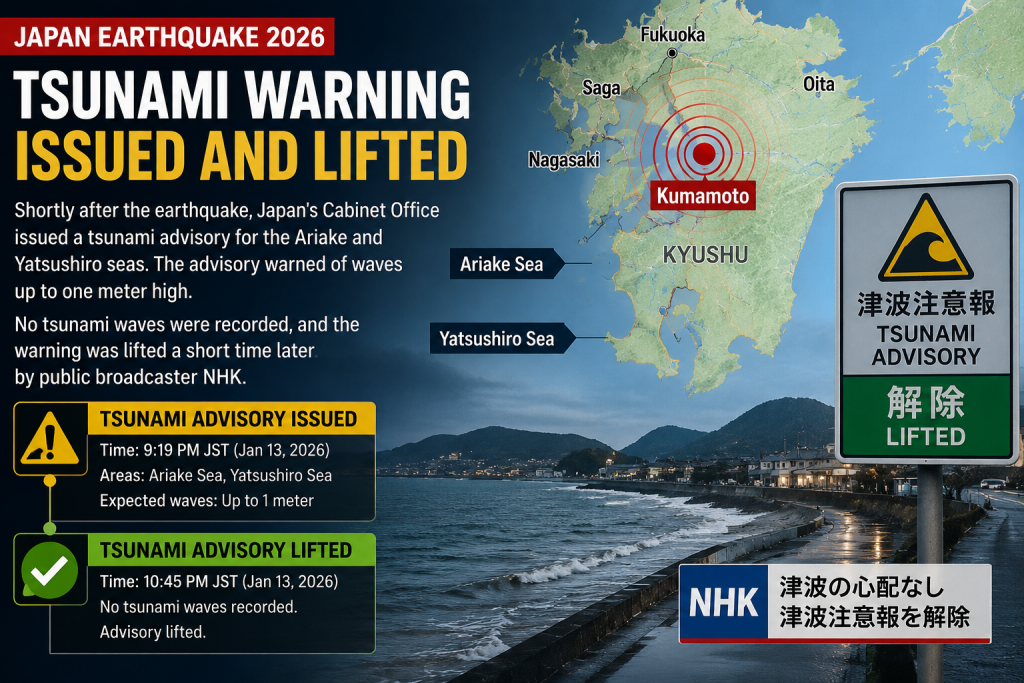
Shortly after the earthquake, Japan’s Cabinet Office issued a tsunami advisory for the Ariake and Yatsushiro seas. The advisory warned of waves up to one meter high. No tsunami waves were recorded, and the warning was lifted a short time later by public broadcaster NHK. (NBC News)
Damage To Buildings And Infrastructure
The earthquake caused widespread damage across Kumamoto prefecture. Roads cracked and buckled, a footbridge collapsed, and a cargo train derailed. Aerial footage also showed collapsed towers at an industrial plant and a residential building on fire in Yatsushiro. Some buildings at the Nippon Paper Industries mill in Yatsushiro City also collapsed, with several workers reported missing. (CNN)
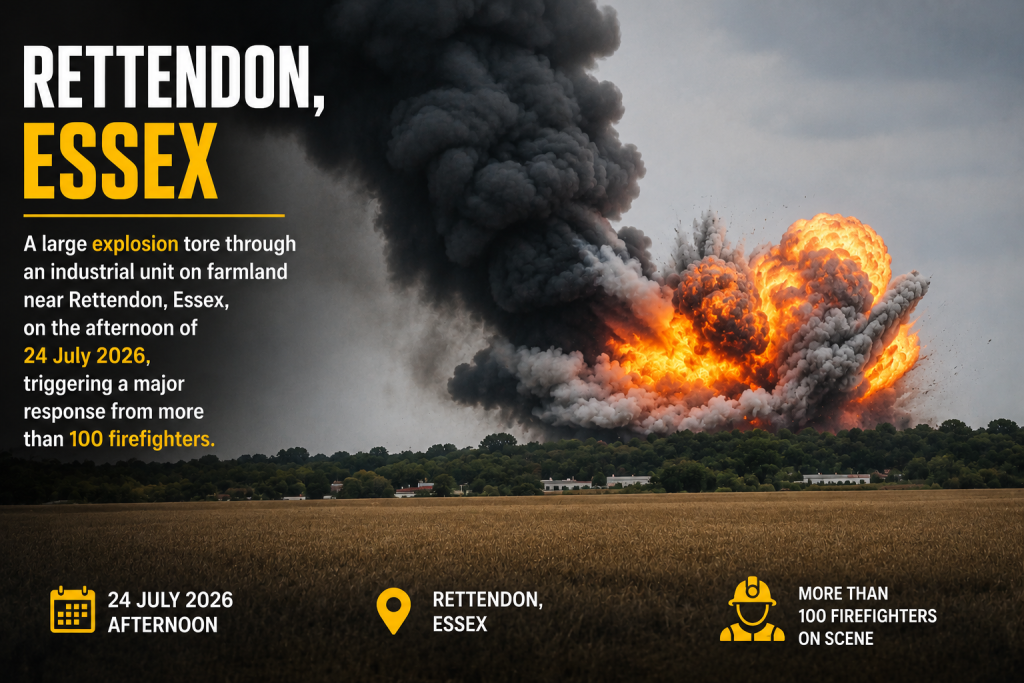
Rettendon, Essex | Farm Warehouse Explodes, Sparking Major Fire Response
A large explosion tore through an industrial unit on farmland near Rettendon, Essex, on the afternoon of 24 July 2026, triggering a major response…
Transport And Power Disruptions
JR Kyushu suspended all its rail services, including Shinkansen bullet trains and local lines. The Minamiaso Railway and Kumamoto Electric Railway also stopped operations. Thousands of homes lost power after the quake. More than 150 public facilities in Kumamoto city were closed, with many turned into temporary evacuation shelters. (Wikipedia)
Nuclear Plant Safety Check
Kyushu Electric Power confirmed that its Sendai and Genkai nuclear power plants, located in nearby prefectures, showed no abnormalities after the earthquake. Authorities continue to monitor these facilities as aftershocks continue in the region. (Wikipedia)
Government Response And Military Deployment
Japan’s government mobilized around 3,600 defense force personnel to support rescue and relief work in Kumamoto prefecture. Prime Minister Sanae Takaichi urged residents to stay alert for the possibility of another strong earthquake in the coming days. (Al Jazeera)
Ongoing Aftershocks And Landslide Risk
The Japan Meteorological Agency recorded more than one hundred aftershocks following the main quake. Experts warned that the shallow nature of the earthquake means the area remains at risk of further strong tremors and landslides for about a week. This risk is especially high in mountainous districts where slopes have already been weakened by the shaking. (Earthquake Insights)
Why This Region Faces Frequent Earthquakes
Kyushu sits within Japan’s Ring of Fire zone, where several tectonic plates meet. The July 2026 earthquake occurred as a result of shallow strike slip faulting on a crustal fault within the upper Eurasian plate, several hundred kilometers from the Ryukyu Trench where the Philippine Sea plate subducts beneath Japan. This geological setting makes Kyushu one of the most seismically active regions in the country. (USGS)
Comparison With The 2016 Kumamoto Earthquakes
| Event | Date | Magnitude | Deaths | Key Impact |
|---|---|---|---|---|
| 2026 Kumamoto Earthquake | July 28, 2026 | 6.8 (USGS) / 7.1 (JMA) | At least 2, expected to rise | Mall collapse, tsunami advisory, rail suspension |
| 2016 Kumamoto Earthquake (Foreshock) | April 14, 2016 | 6.2 | 9 | Widespread building damage in Mashiki |
| 2016 Kumamoto Earthquake (Main Shock) | April 16, 2016 | 7.0 to 7.3 | 32 (combined toll of 41) | Landslides, Kumamoto Castle damaged |
This table shows how the current earthquake compares to the destructive 2016 sequence that struck the same region.
What Residents Are Advised To Do
Local authorities have asked residents in affected areas to avoid non-essential hospital visits, stay away from damaged buildings, and follow evacuation orders where issued. People in mountainous areas have been told to watch for signs of landslides, especially during rainfall. Officials also recommend keeping emergency supplies ready due to the ongoing risk of aftershocks. (CNN)
FAQ: “Japan Earthquake 2026”
Q: When did the Japan earthquake 2026 happen?
Q: What was the magnitude of the Japan earthquake 2026?
Agencies reported slightly different figures. The Japan Meteorological Agency initially gave a preliminary magnitude of 7.1, while the U.S. Geological Survey later revised its measurement to 6.8. The event caused shaking rated at intensity JMA 7, one of the highest levels on Japan’s seismic intensity scale.
Q: Where was the epicenter of the earthquake?
Q: How many people died in the Japan earthquake 2026?
Q: What damage did the earthquake cause?
The earthquake damaged buildings, bridges, and roads, and triggered fires and power outages. A shopping center in Kashima town suffered heavy damage, including a collapsed second floor, with people reportedly trapped inside. A major hospital in Kumamoto also sustained damage, including water leaks and collapsed walls, while operating at full capacity.