












NESO has issued an Electricity Margin Notice, asking power generators for more supply as a third summer heatwave pushes UK temperatures above 30C, with some areas reaching 36C.

Why NESO Issued The Notice
The National Energy System Operator forecast a tight electricity margin for Thursday evening because of extreme temperatures across Europe. This was the third electricity margin notice issued by NESO this year. These notices are usually sent in winter, when homes use more heating. This time, the cause was heat, not cold. BusinessGreen
How Heat Puts Pressure On The Grid
High temperatures make several parts of the power system less efficient at the same time. Nuclear plants, gas stations, and water cooling systems all work harder to stay within safe limits. On top of that, homes and offices use more electricity to run fans and air conditioning. This combination raises demand while lowering supply. National World
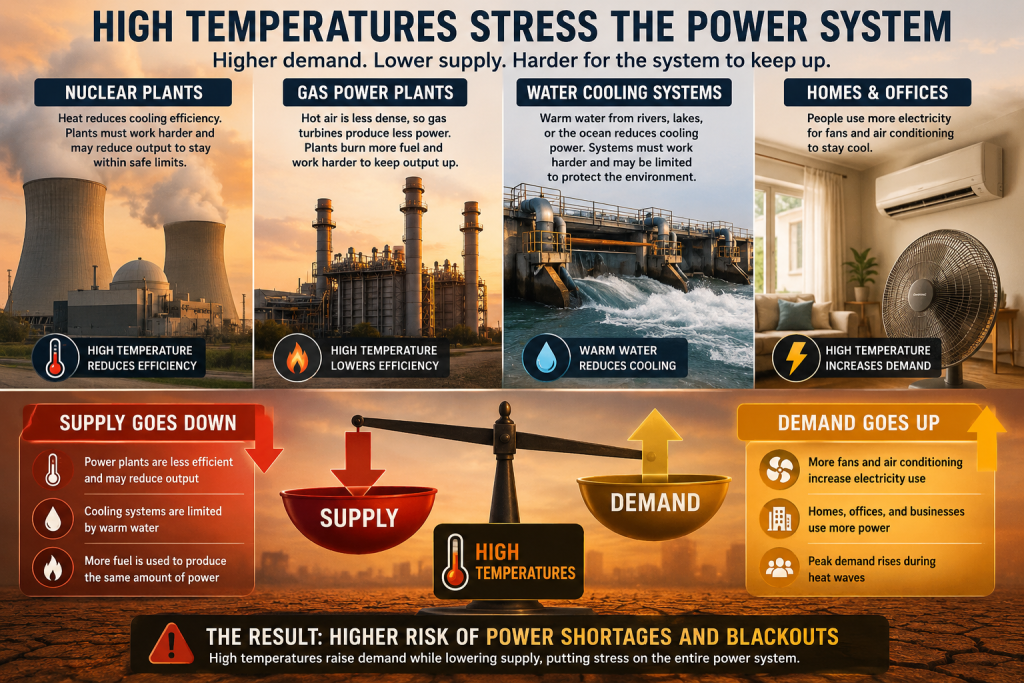
Energy analysts have pointed out that heat also affects power stations outside the UK. In France, some nuclear reactors must shut down if they cannot be cooled properly, which reduces the electricity available for import into Britain through interconnectors. Energy and Climate Intelligence Unit
What An Electricity Margin Notice Actually Means
An Electricity Margin Notice is one of the operational tools NESO uses to manage the power system. It tells the market that extra generation capacity may be needed and asks companies to declare any spare capacity they have. It is not a warning that supply is at risk, and it is not a signal of power cuts. NESO
NESO describes its safety margin as a cushion of spare capacity above expected demand. If that cushion narrows, the operator asks the market to restore it. A smaller margin does not mean the lights will go out. It means NESO wants a bigger buffer in place. NESO
Electricity Margin Notice vs Capacity Market Notice
The table below shows the difference between the two main system notices NESO can issue.
| Notice Type | Trigger Level | Purpose | Who Acts On It |
|---|---|---|---|
| Capacity Market Notice (CMN) | Available generation below requirement plus 500MW | Automated alert to Capacity Market providers | Runs automatically, does not drive NESO’s own decisions |
| Electricity Margin Notice (EMN) | Available generation below requirement minus 500 to 800MW | Direct request to the market for more generation or flexibility | NESO control room takes active steps in response |
Technology News | Meta Jumps Into AI Coding Market in Race Against Anthropic, AI Coding
Meta has released Muse Spark 1.1, a new AI model built for coding and agentic tasks, as it tries to catch up with Anthropic…

A Summer Of Repeated Warnings
This year marked the first time NESO issued a summer Electricity Margin Notice. The first one came on 23 June, ahead of an evening peak on 24 June, when a shortfall of around 1,900MW was flagged before the notice was later cancelled. Since then, NESO has issued further notices as each new heatwave has arrived, with the most recent covering Thursday evening’s peak demand period. IN Power
Every notice issued this summer has followed the same pattern. NESO flags a tighter than usual margin ahead of time, the market responds with extra capacity or flexibility, and the notice is withdrawn once the risk passes. In each case, electricity supplies stayed secure throughout. Nation.Cymru
Is This A Sign Of Possible Power Cuts
No. NESO has been clear that a margin notice does not mean the system is short of power. It is a routine tool used to widen the safety cushion between supply and demand. Only in extremely rare cases, if forecast demand were to exceed available supply, would NESO move to stronger steps such as asking network operators to manage demand. NESO
What NESO Is Asking The Market To Do
When NESO issues an Electricity Margin Notice, it is sending a direct message to generators and other market participants. It wants them to make any spare capacity available and to confirm what they can offer during the tight period. This can include bringing reserve gas plants online, importing more power through interconnectors, or securing flexibility from large energy users. NESO
Why This Summer Is Different
Until this year, margin notices were mostly linked to cold winter evenings, when heating demand peaks. The shift to summer notices shows that extreme heat now creates its own type of strain on the grid, through lower plant efficiency, reduced transmission capacity, and higher cooling demand at the same time. Analysts say this pattern is likely to continue as summers get hotter. IN Power
FAQ: NESO Issues Rare Summertime Warning: UK Told to Save Power as Temperatures Soar
Q: What is NESO and why did it issue a warning?
NESO stands for the National Energy System Operator, the body responsible for balancing Britain’s electricity supply and demand. On July 8, 2026, NESO issued a rare summer Electricity Margin Notice, forecasting a shortfall of around 1.2 gigawatts in electricity margins during the Thursday evening peak demand period.
Q: Why is this warning considered “rare”?
This marks the third electricity margin notice NESO has issued this year, a type of alert that is typically sent during cold winter spells rather than summer months. Summertime warnings over power supplies tend to be extremely rare, making this event notable enough to draw national media attention. BusinessGreen
Q: What’s causing the power strain this time?
Record or near-record temperatures in June and early July 2026 have pushed electricity demand higher as households and businesses turn to fans and air conditioning, with peak demand often occurring in the evening between 7–10 pm, when solar output drops sharply. Extreme heat also reduces the efficiency of power generation processes, including nuclear plants, gas stations, and water cooling systems, while simultaneously driving up electricity use for cooling. Energy News Beat
Q: Does this mean the UK is at risk of blackouts?
No immediate blackout risk exists, but the tight margins highlight ongoing vulnerabilities in Britain’s power system tied to extreme weather and the country’s evolving energy mix. The notice is essentially a signal to the electricity market asking for a greater safety cushion between supply and demand for a limited period, and similar notices issued earlier this year were cancelled ahead of time once NESO felt confident supply levels were adequate.
Q: How hot is it expected to get?
Health and fire warnings have been issued as temperatures soar during the third heatwave of the year, with heat expected to peak on Thursday and Friday, when temperatures will widely exceed 30°C across the UK and could reach up to 36°C in parts of England, according to the Met Office.
Q: What is NESO doing to address the shortfall?
NESO requested additional capacity from generators and flexibility providers to bolster power supplies, and in earlier notices this summer, it sought hundreds of megawatts of extra power, in some cases paying premium prices to secure supply.
Q: How does the UK’s energy mix affect this situation?
Britain’s electricity generation has shifted significantly toward low-carbon sources, with renewables such as wind, solar, hydro, and biomass often making up 45–55%+ of generation in recent quarters — reaching a record 53.1% share in Q1 2026, driven largely by wind. Gas typically supplies 25–40% as flexible backup, nuclear contributes around 8–12%, and imports via interconnectors add another 10–20%, while coal has been effectively phased out since 2024. This heavier reliance on weather-dependent renewables and interconnectors is part of why extreme heat events can strain margins more than in the past.