












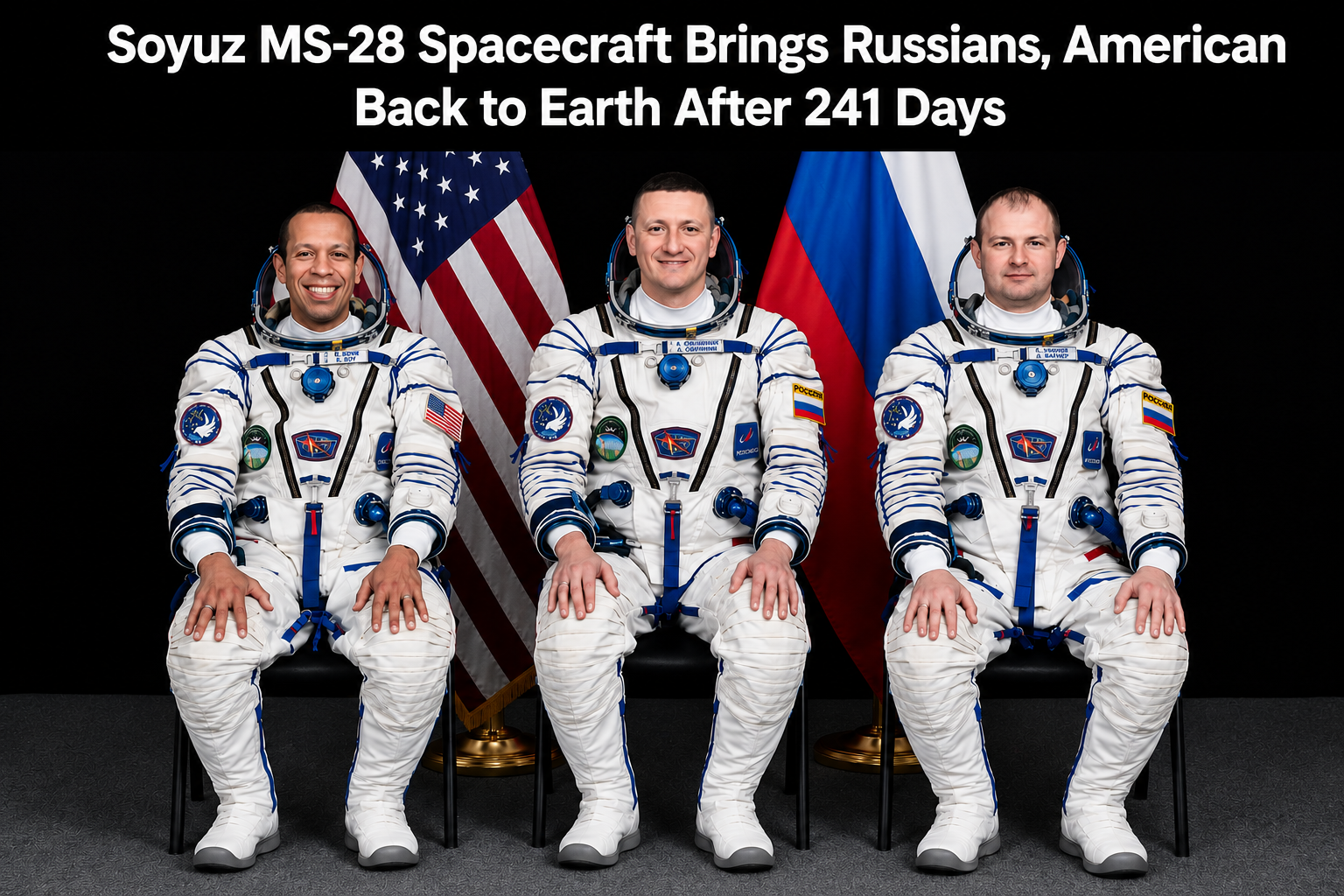
The Soyuz MS-28 spacecraft landed in Kazakhstan on July 26, carrying NASA astronaut Chris Williams and Roscosmos cosmonauts Sergey Kud-Sverchkov and Sergei Mikaev back to Earth after 241 days in space. (Space.com)

Crew and Mission Overview
The crew launched to the International Space Station on November 27, 2025, which was Thanksgiving Day in the United States. This mission was the first spaceflight for both Williams and Mikaev, while Kud-Sverchkov was flying for the second time. (Space.com)
During their time in orbit, the trio completed 3,856 orbits of Earth and traveled more than 102 million miles, which is about 164 million kilometers. (Space.com)
| Detail | Information |
|---|---|
| Spacecraft | Soyuz MS-28 |
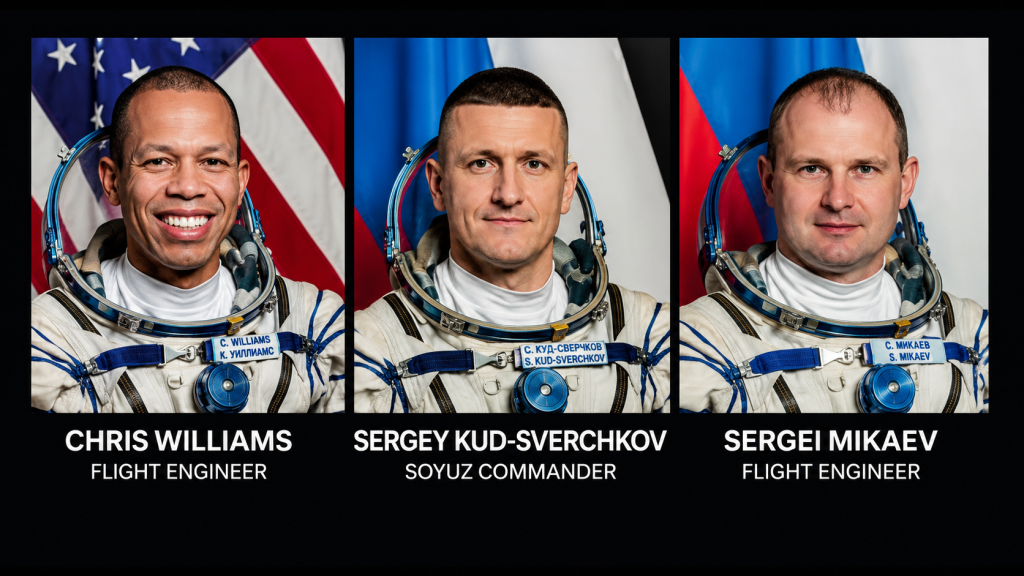
| Crew | Chris Williams (NASA), Sergey Kud-Sverchkov (Roscosmos), Sergei Mikaev (Roscosmos) |
| Launch date | November 27, 2025 |
| Landing date | July 26, 2026 |
| Mission length | 241 days |
| Orbits completed | 3,856 |
| Distance traveled | Over 102 million miles (164 million km) |
Undocking and Return Journey
The Soyuz MS-28 spacecraft undocked from the space station’s Rassvet module early on July 26 before beginning its descent back to Earth. (NASA)
After separating from the station, the spacecraft performed a deorbit maneuver and made a controlled, parachute-assisted descent toward its landing zone in Kazakhstan. (Daily Galaxy)
Landing in Kazakhstan
Touchdown took place on the steppe of Kazakhstan, southeast of the city of Dzhezkazgan. (Space.com)
Recovery teams met the crew shortly after landing to help them out of the capsule and begin initial medical checks, a standard step after long-duration missions in space. (Daily Galaxy)
What Happens After Landing
Following the landing, the crew traveled by helicopter to Karaganda, Kazakhstan, where further post-landing operations took place. (WKNO FM)
From there, Williams returned to NASA’s Johnson Space Center in Houston, while Kud-Sverchkov and Mikaev headed back to their training base in Star City, Russia. (Daily Galaxy)
Trial of Lindsay Clancy Opens | Mother Accused of Killing Her 3 Children Faces Opening Statements
Opening statements began in the murder trial of Lindsay Clancy, the Duxbury, Massachusetts mother charged with killing her three young children in January 2023.…

Health Effects of Long-Duration Spaceflight
Spending more than eight months in weightlessness affects the human body in several ways. Experts note that the cardiovascular system needs time to readjust once astronauts return to Earth’s gravity, since blood circulation works differently in space. (Zamin.uz)
Medical teams monitor returning crew members closely in the days and weeks after landing to support this readaptation process. (Zamin.uz)
Soyuz MS-28 at a Glance
| Category | Detail |
|---|---|
| Operator | Roscosmos |
| Spacecraft type | Soyuz MS |
| Launch site | Baikonur Cosmodrome, Site 31/6 |
| Docking port used | Rassvet nadir, ISS |
| Landing site | Kazakh Steppe, Kazakhstan |
| Crew return points | Johnson Space Center (Houston) and Star City (Russia) |
Background on the Mission
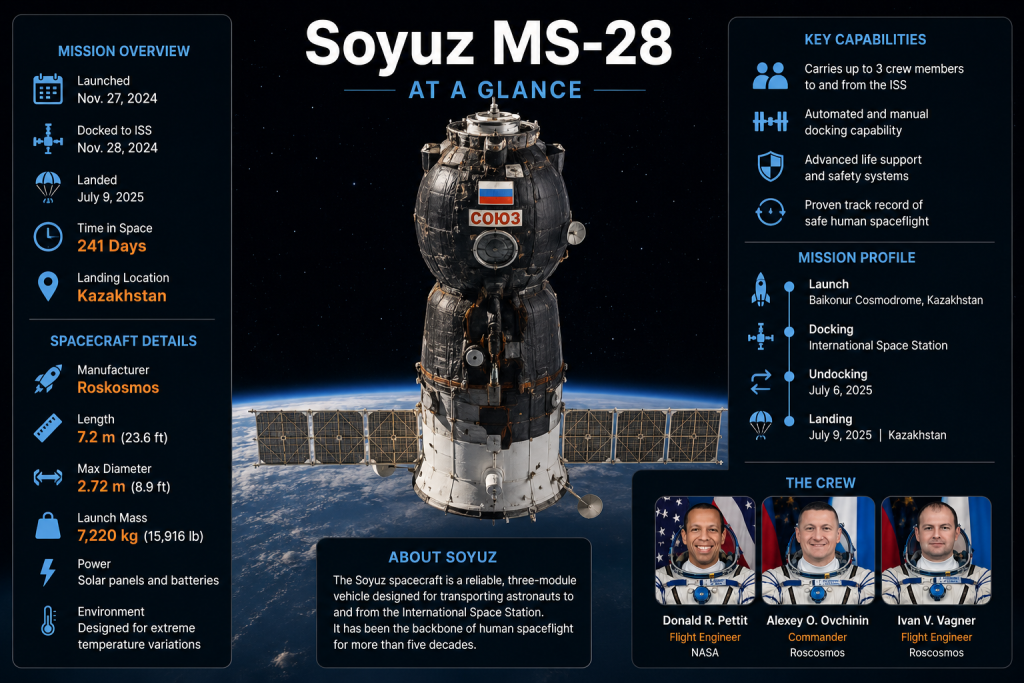
Soyuz MS-28 is also known to NASA as Soyuz 74S. It launched aboard a Soyuz-2.1a rocket and docked with the Rassvet module of the International Space Station shortly after liftoff. (Wikipedia)
This mission continued a long-running pattern of joint operations between NASA and Roscosmos aboard the International Space Station, where astronauts and cosmonauts regularly fly together despite separate national space programs. (Zamin.uz)
FAQ: Soyuz MS-28 Spacecraft Brings American, Russians Back to Earth After 241 Days
Q: Who was on board the Soyuz MS-28 spacecraft?
A: NASA astronaut Chris Williams and Russian cosmonauts Sergey Kud-Sverchkov and Sergei Mikaev. It was Williams’ and Mikaev’s first spaceflight, and Kud-Sverchkov’s second.
Q: When did Soyuz MS-28 land?
A: The spacecraft landed on July 26, 2026, touching down on the steppe of Kazakhstan at approximately 6:25 a.m. EDT (1025 UTC).
Q: How long was the crew in space?
A: The trio spent 241 days in space, having launched to the International Space Station on November 27, 2025 (Thanksgiving Day).
Q: Where exactly did the spacecraft land?
A: The Soyuz MS-28 capsule landed southeast of the Kazakh city of Dzhezkazgan, in the Kazakh Steppe, following a parachute-assisted descent after undocking from the ISS’s Rassvet module.
Q: How far did the crew travel during their mission?
A: They orbited Earth 3,856 times and traveled more than 102 million miles (164 million kilometers).
Q: What did the crew do during their mission?
A: Chris Williams conducted two spacewalks and supported numerous scientific experiments aboard the ISS aimed at improving life both in space and on Earth.
Q: What happens to the crew after landing?
A: After touchdown, the crew is flown by helicopter to Karaganda, Kazakhstan, where they undergo initial medical checks before beginning a longer rehabilitation process to help their bodies readapt to Earth’s gravity after prolonged weightlessness.
Q: Why is Soyuz MS-28 significant?
A: Beyond the safe return itself, the mission highlights the readaptation challenges astronauts face after long-duration spaceflight — particularly cardiovascular adjustment — and reflects continued international cooperation on the ISS between NASA and Roscosmos.
Q: What mission comes next?
A: Soyuz MS-29 had already launched to the ISS on July 14, 2026, ahead of the MS-28 crew’s return, continuing the station’s ongoing crew rotation.