












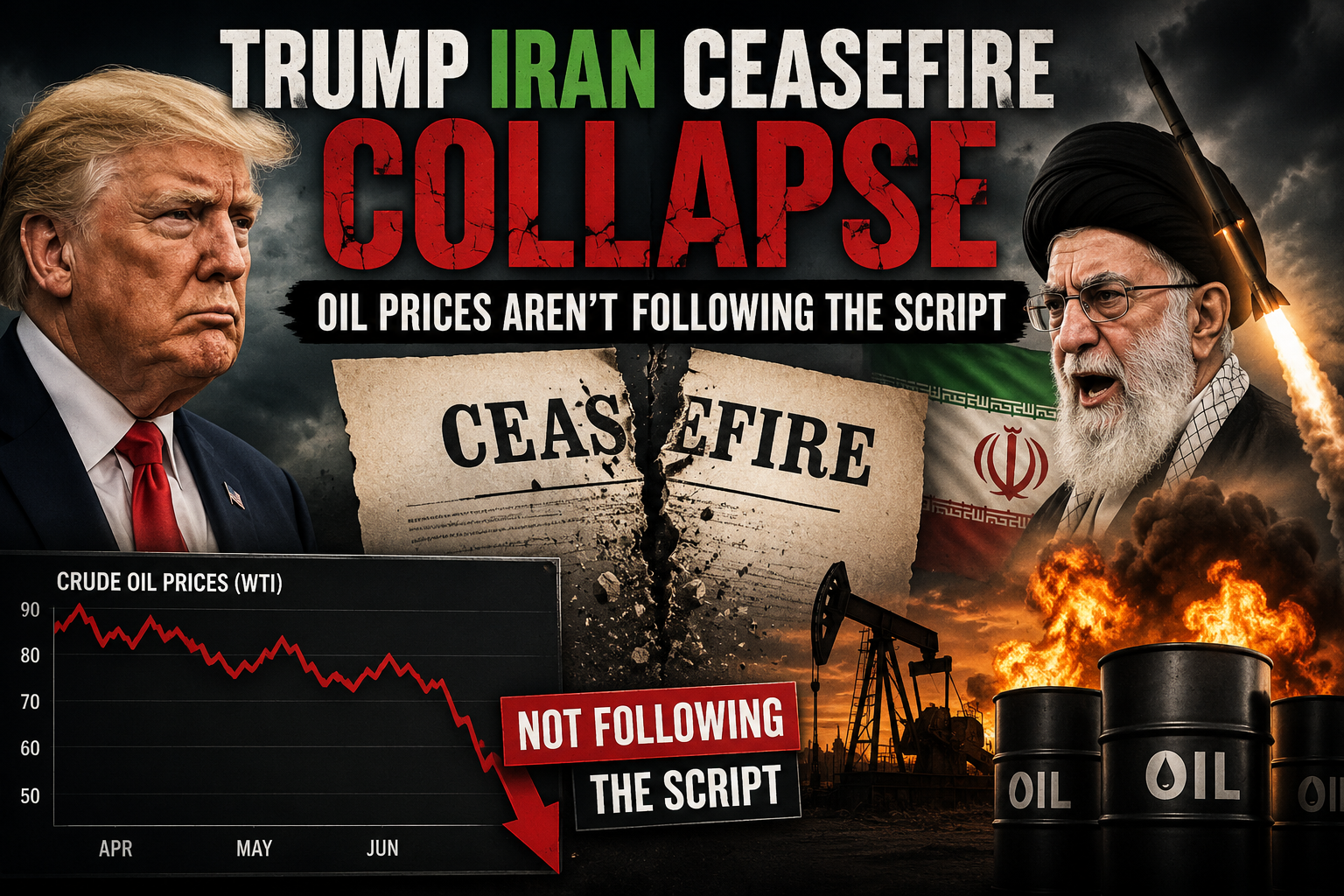
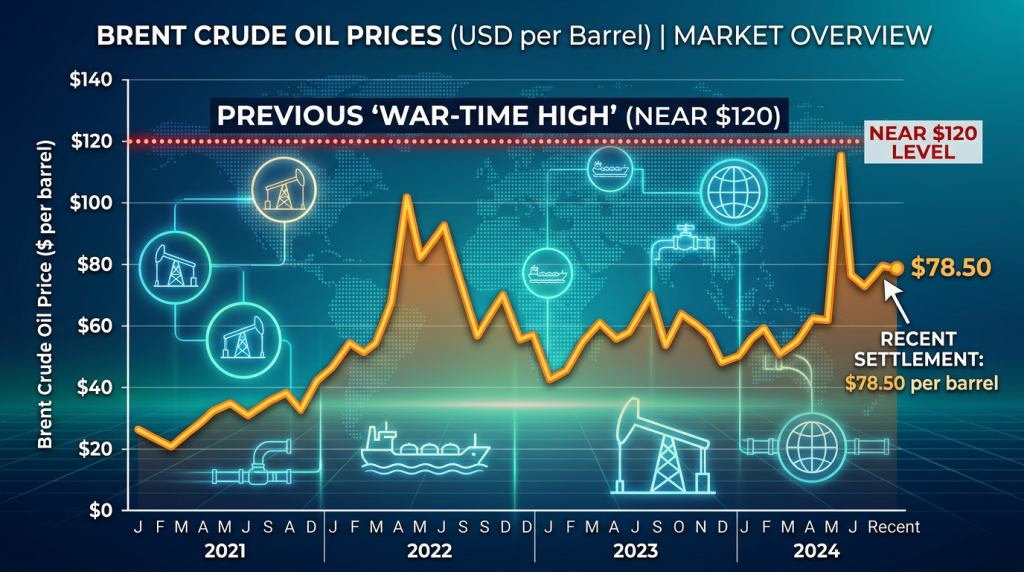
Oil prices jumped after President Trump said the Iran ceasefire was “over,” but they did not spike to war-time highs. Brent crude moved into the high $70s per barrel, well below the near $120 level seen earlier in the conflict.

What Trump Said About The Ceasefire
President Trump told reporters at a NATO summit in Ankara that the ceasefire deal with Iran was finished. He said talks could continue, but called further negotiation a waste of time. His comments followed fresh strikes between the two sides. (NBC News)
The renewed conflict started after Iran’s Revolutionary Guard attacked commercial tankers in the Strait of Hormuz. The United States responded with Central Command strikes on Iranian targets. The Treasury Department then revoked a sanctions waiver that had allowed Iran to sell oil on world markets. (CBS News)
How Oil Prices Reacted
Brent crude rose more than 5 percent after Trump’s remarks, trading close to $78 a barrel. West Texas Intermediate, the main U.S. benchmark, climbed to around $74 a barrel. Both benchmarks had been trading near $69 to $70 a barrel in the weeks before this news. (Yahoo Finance)
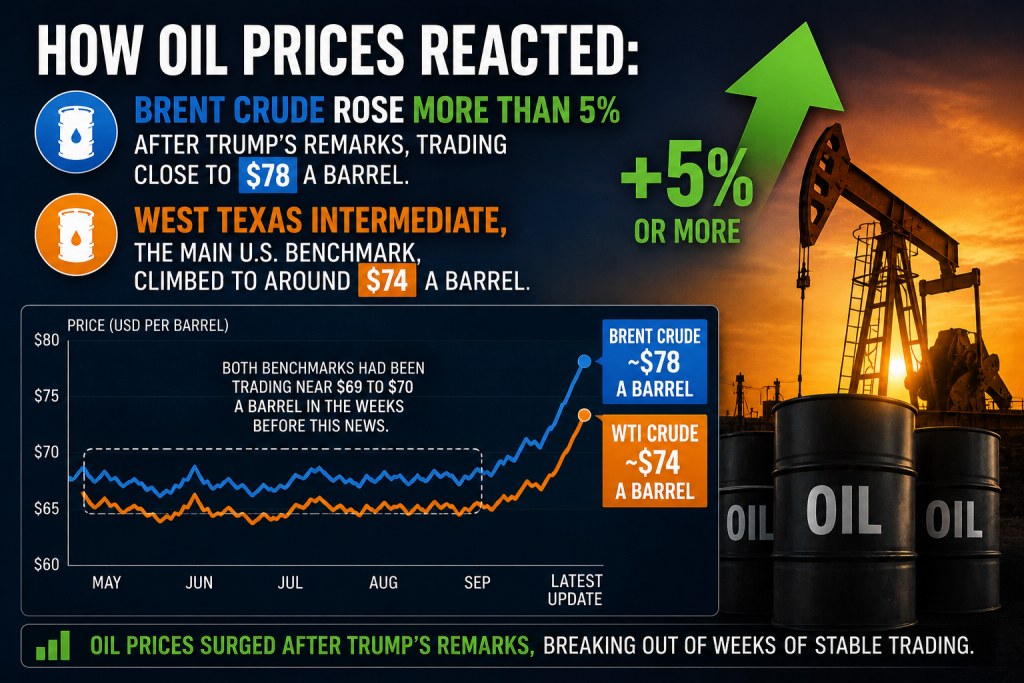
The size of the jump looked large in percentage terms. But the actual price level stayed far below the peak of nearly $120 a barrel recorded earlier in the war. This is one reason analysts describe the market reaction as measured rather than panicked. (Al Jazeera)
Why Oil Isn’t Following The Old Script
During the earlier phase of the war, any sign of conflict pushed oil sharply higher for extended periods. This time, prices spiked and then eased within a day or two. By Thursday, WTI had slipped back toward $72.90 a barrel even as political reaction to the ceasefire collapse grew louder in Washington. (Benzinga)
Market analysts point to a few reasons for this pattern. Global demand has softened. Shipping routes around the Strait of Hormuz have adapted, with some tankers finding alternative paths. Traders have also grown used to on-and-off tension between the U.S. and Iran since the memorandum of understanding was signed in June. (NBC News)
One energy strategist noted that markets had priced in a smooth path toward de-escalation for several weeks. The latest strikes forced a reassessment of that assumption, but not a full return to war-era pricing. (CBS News)
Trump Administration Marriage Immigration Changes Explained: New Rules Impacting U.S. Citizen
Spouses of U.S. citizens now face more scrutiny and fewer guarantees under new Trump administration immigration practices, even though marriage to a citizen has…

Strait Of Hormuz Remains The Key Risk
The Strait of Hormuz carries about one-fifth of the world’s oil and liquefied natural gas trade in normal times. Any disruption here has an outsized effect on global energy supply. Since late February 2026, tanker traffic through the strait has been sharply reduced due to the conflict. (Wikipedia)
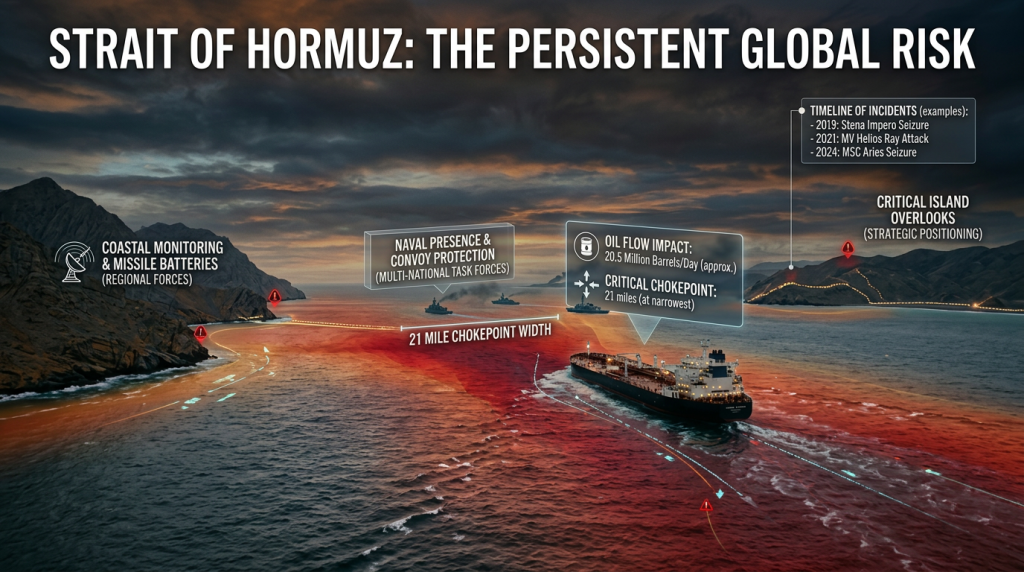
Shipping data from tracking platforms showed a brief recovery in traffic in late June, with vessel crossings more than doubling in a single day. That recovery stalled again once new attacks on tankers were reported. (Al Jazeera)
Impact On Stock Markets
U.S. stock indexes fell alongside the oil price increase. The Dow Jones Industrial Average dropped more than 500 points. The S&P 500 declined modestly, while the Nasdaq showed mixed movement due to strength in semiconductor shares. (Yahoo Finance)
Airlines and cruise operators, which carry heavy fuel costs, saw some of the sharpest share price declines on the day. Treasury yields also ticked higher as the news spread. (WILX)
Effect On Gas Prices For Consumers
Retail gas prices moved higher following the ceasefire collapse. The national average price per gallon rose to about $3.85, according to AAA data. Some states, including California, remained well above $5 per gallon. (Benzinga)
Public concern about fuel costs has been high throughout the conflict. Surveys conducted earlier this year found that a large majority of Americans worried about the economic impact of the war with Iran. (Deseret News)
Oil Price Comparison Table
| Date | Brent Crude (per barrel) | WTI Crude (per barrel) | Context |
|---|---|---|---|
| Before Feb 28, 2026 war | ~$72 | ~$68 | Pre-conflict baseline |
| Peak of war (spring 2026) | ~$120 | ~$115 | Height of Strait of Hormuz closure |
| Mid-June 2026 (MOU signed) | ~$78 | ~$70 | Ceasefire optimism |
| Late June to early July 2026 | $69 to $76 | $68 to $74 | Intermittent tanker attacks |
| After ceasefire declared “over” (July 8, 2026) | ~$78 | ~$74 | Renewed strikes, sanctions waiver revoked |
| July 9, 2026 | $77.33 | $72.92 | Prices ease slightly |
Sources: NBC News, CNBC, Benzinga
Political Reaction In Washington
Democratic lawmakers criticized the administration’s handling of the situation. House Minority Leader Hakeem Jeffries said the ceasefire had collapsed again and called the renewed war a disaster. Senator Patty Murray linked the development to rising gas prices and questioned the administration’s approach. (Benzinga)
Iran’s foreign ministry called the U.S. decision to revoke the oil sanctions waiver a violation of the memorandum of understanding. Iranian officials said their armed forces would defend the country’s sovereignty against what they described as American aggression. (Yahoo Finance)
What Analysts Expect Next
Some market watchers believe the latest escalation is a negotiating tactic rather than a full return to war. They note that both Washington and Tehran have shown willingness to return to the table after previous flare-ups. (CBS News)
Other analysts, including a senior fellow at the Brookings Institution, argue the conflict is fundamentally about control of the Strait of Hormuz and access to oil revenue. They expect prices to stay elevated if hostilities continue. (Marketplace)
Vanda Insights, a Singapore-based energy research firm, has previously noted that oil price declines during ceasefire periods were largely driven by sentiment rather than confirmed supply data. This suggests future price swings will depend heavily on real developments in the strait, not just diplomatic statements. (Al Jazeera)
FAQ: US-Iran Ceasefire Collapse & Oil Prices
Q: Did oil prices actually rise after Trump said the ceasefire was “over”?
Yes — significantly. Oil prices jumped 6% on concerns that renewed hostilities would jeopardize the flow of oil through the Strait of Hormuz. Brent crude futures increased more than 5%, rising above $78 a barrel, while U.S. crude jumped as high as $76 per barrel, its largest one-day move up since the beginning of June. CBS News + 2
Q: If prices jumped, why do they seem “flat” compared to expectations?
The move looks smaller in context. Brent’s climb to $78.02 with a brief top above $80 is still well below its peak from earlier in the war, when the most actively traded contract reached nearly $120. Markets are pricing in renewed risk, not a full return to wartime disruption. ABC7 New York
Q: What triggered Trump’s “ceasefire is over” comments?
Trump’s remarks came just hours after U.S. Central Command announced that the military struck targets in Iran after Iran attacked commercial vessels in the Strait of Hormuz. Iran’s Islamic Revolutionary Guard Corps had attacked three tankers in the Strait, which were followed by the U.S. strikes. The HillCBS News
Q: Did the U.S. take any other actions besides military strikes?
Yes. The U.S. Treasury revoked a sanctions waiver that had allowed Iranian oil to be sold into the global market, a move that removed a key source of revenue for the Iranian regime. NBC NewsCBS News
Q: Why aren’t oil markets pricing in a worst-case scenario?
Analysts point to two reasons. Substantial volumes of oil have continued flowing on tankers out of the region in recent weeks, improving the market’s balances somewhat, and the market has adapted to reduced traffic through the Strait of Hormuz by finding alternative routes, while global demand has also fallen. AxiosCBS News
Q: Do investors believe this is really the end of the ceasefire?
Many are skeptical it’s permanent. Some investors see the latest violence as an effort by both sides to gain leverage following the memorandum of understanding signed in June, treating declarations of walking away from talks as a negotiating tactic rather than a genuine collapse. CBS News
Q: How is this affecting the broader economy?
The worry is that continued conflict could block the Strait of Hormuz and prevent crude deliveries from the Persian Gulf, worsening inflation and potentially forcing the Federal Reserve and other central banks to raise interest rates. U.S. consumer prices had already risen 4.1% in May, the highest in three years, adding pressure on households. ABC7 New YorkDeseret News
Q: Is there still a path to de-escalation?
Possibly. Trump said U.S. representatives can continue negotiations even as he cast doubt on the ceasefire’s status, though he suggested talks may be a waste of time. WILX